Full replacement in one visit
A household at this income level can usually absorb a full torsion spring and hardware replacement in one visit rather than limping a door along with patch repairs for another two years.
Waterflow, Farmington
Waterflow homes run a median income near $60,278, well above the area median, which changes the repair-or-replace math on doors built around 1986. Here's how that plays out.
Watch-outs
Waterflow households sit at a median income around $60,278, noticeably higher than the roughly $47,505 median across the wider Farmington service area. That number matters more than it sounds like it should, because it sets where the repair-or-replace line falls.
A household at this income level can usually absorb a full torsion spring and hardware replacement in one visit rather than limping a door along with patch repairs for another two years.
The mistake we see most is the opposite: owners here keep paying for small service calls on a door that's already past the point where repair makes financial sense, because nobody told them where that point was.
With roughly 410 households in Waterflow, most built around the same era, that threshold tends to land at the same age for a lot of doors at once, not spread out randomly over decades.
Local causes
Housing in this part of the service area, Waterflow included, was mostly built between 1978 and 1993, with Waterflow's own median landing around 1986. That means the original garage door hardware on a lot of these houses is now pushing 38 years old - galvanized torsion springs rated for a fixed number of cycles, steel rollers with no sealed bearing, and tracks bolted with hardware that's hard to find in a box store today. Layer the region's cold climate on top of that and you get hardened grease, stiffened weatherstripping, and springs that lose tension faster in winter than the rating sheet suggests. It's not one dramatic failure - it's thirty-eight years of freeze-thaw cycling on parts that were never meant to last past year twenty.
Pricing
We don't have a flat number to quote you here, and anyone who gives you one over the phone without seeing the door is guessing.
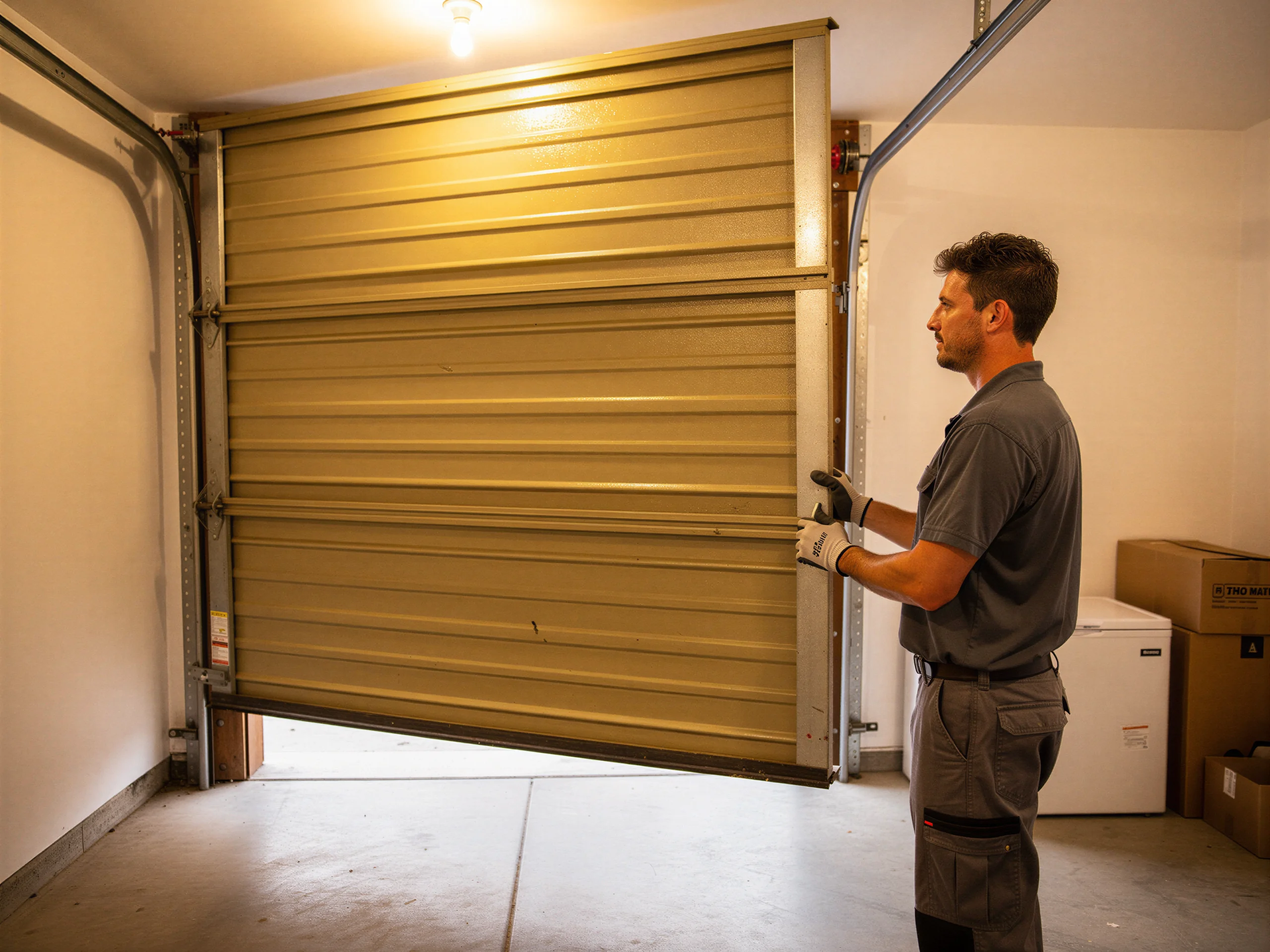
What we can tell you is how the decision usually breaks: a door still on its original 1980s-era hardware, showing wear on more than one system (spring, rollers, and track), is almost always cheaper to replace outright than to keep repairing piece by piece.
A door with one failed part and otherwise sound hardware is worth fixing. At Waterflow's median income, replacement is often the move that actually saves money over a three-to-five-year horizon, even though the single repair bill looks smaller today.
DIY or pro
Lubricating hinges and rollers, checking the auto-reverse safety feature, and clearing track debris are all fine to do yourself, and doing them twice a year will extend a door's life regardless of how old it is.
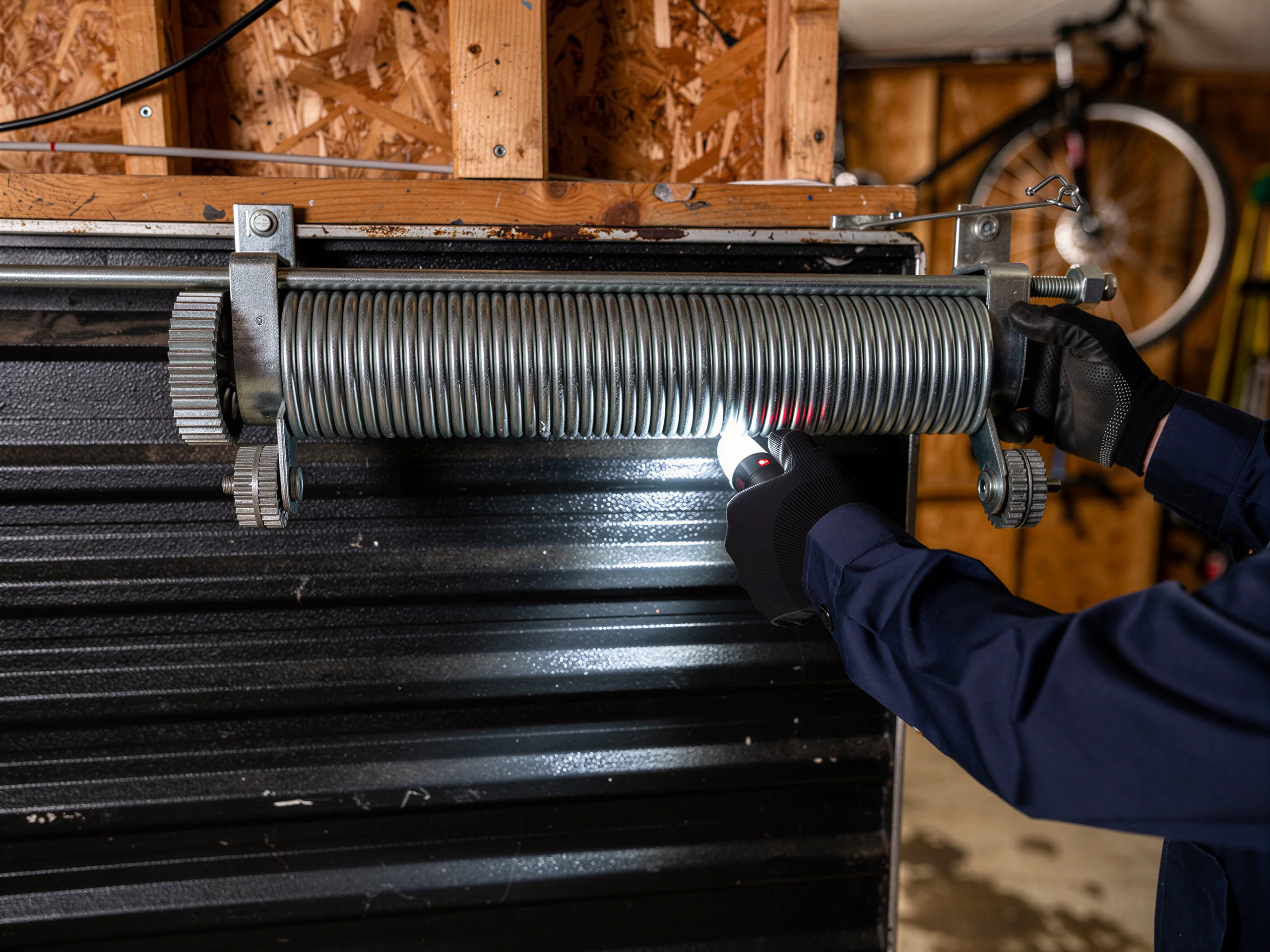
Adjusting or replacing a torsion spring is not a DIY job - the spring is under enough tension to cause serious injury, and that doesn't change because the house is in Waterflow instead of somewhere with a hardware store five minutes away.
If you're not sure whether what you're looking at is a lubrication job or a spring job, that uncertainty is itself the reason to have someone look at it before you touch it.
Warning signs
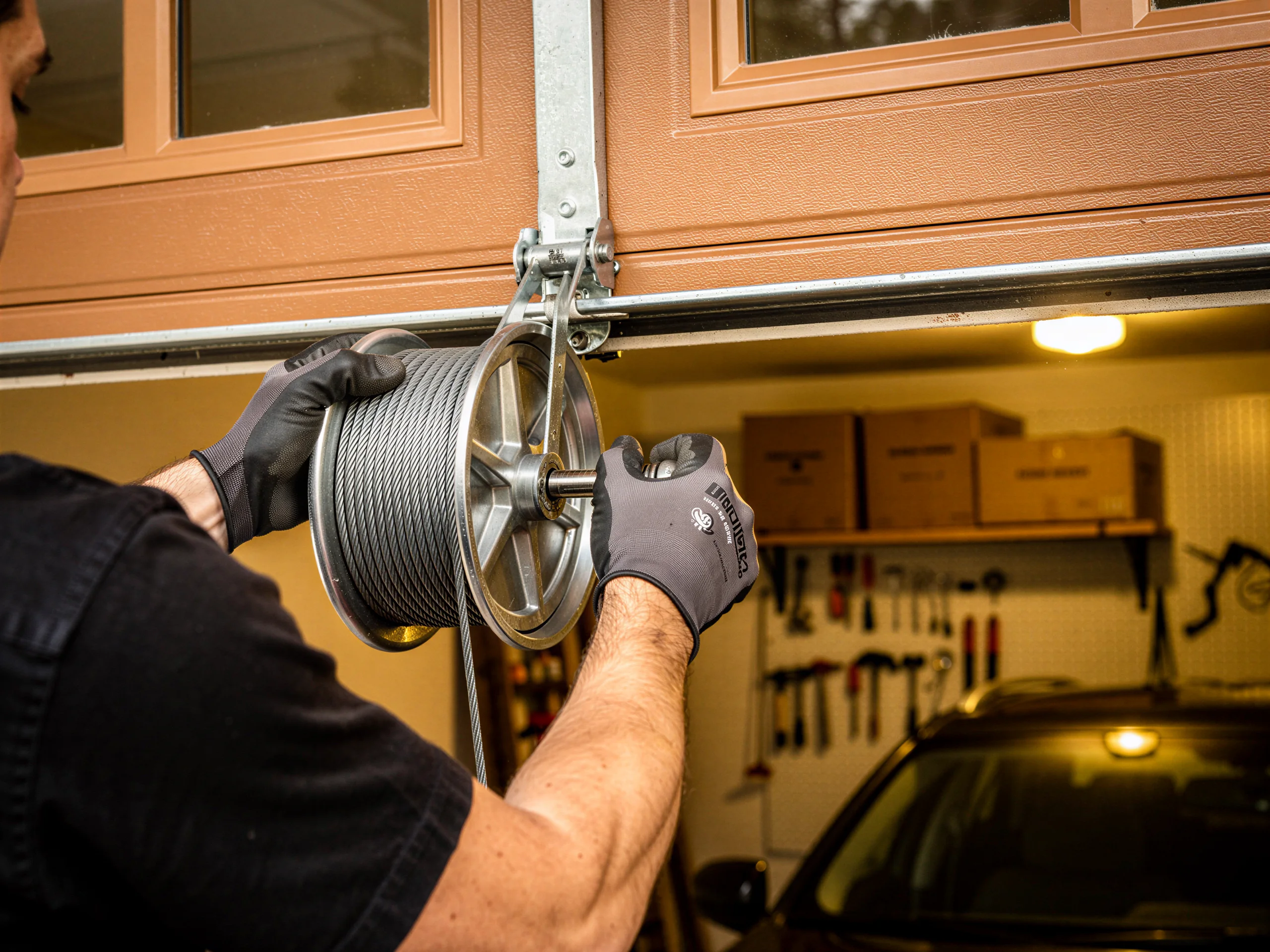
On a door from the mid-1980s building boom, the common signs are a door that groans or chatters going up, a opener that strains and then reverses partway, or a door that feels noticeably heavier to lift by hand in January than it did in July. That last one is the cold-weather spring tension loss showing up physically. Rust bleeding from roller brackets, a track that's pulled slightly away from the frame, or a cable that's starting to fray at the drum are all original-hardware symptoms, not random bad luck, and they tend to show up in clusters on houses built in the same stretch of years.
Timing
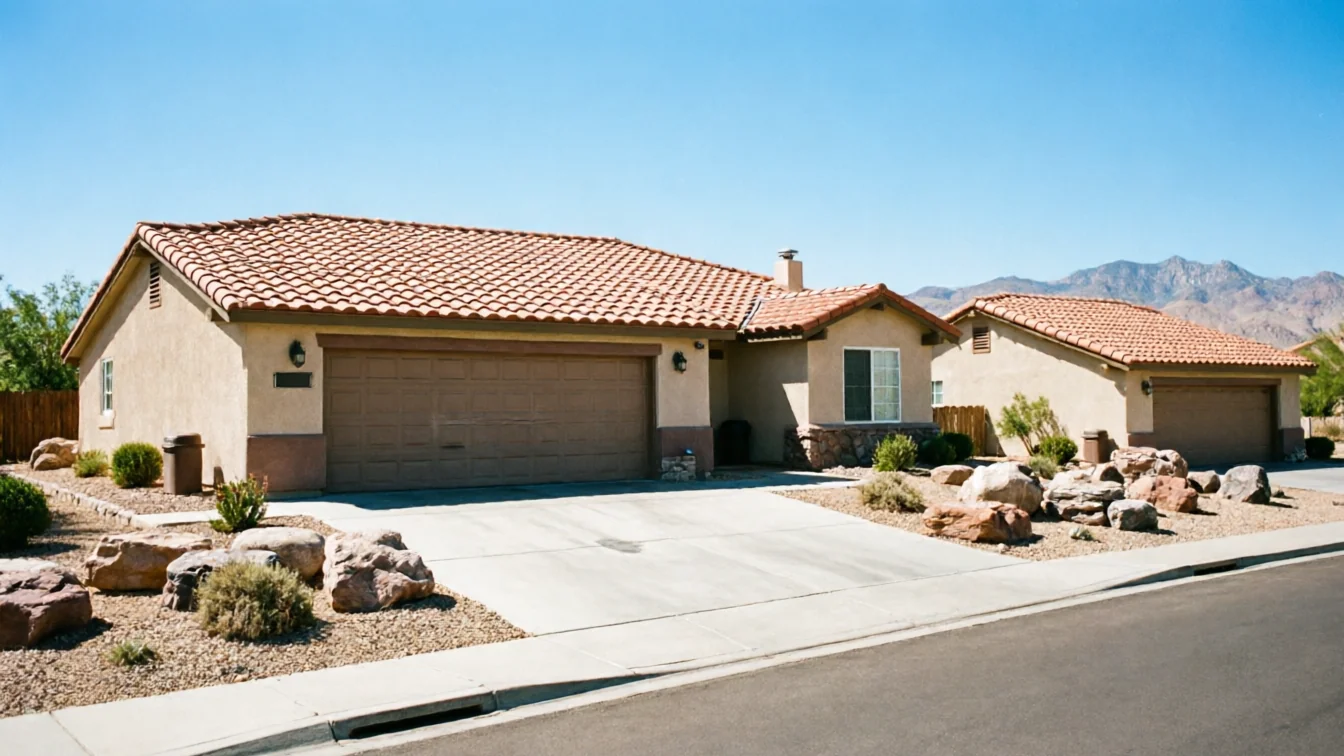
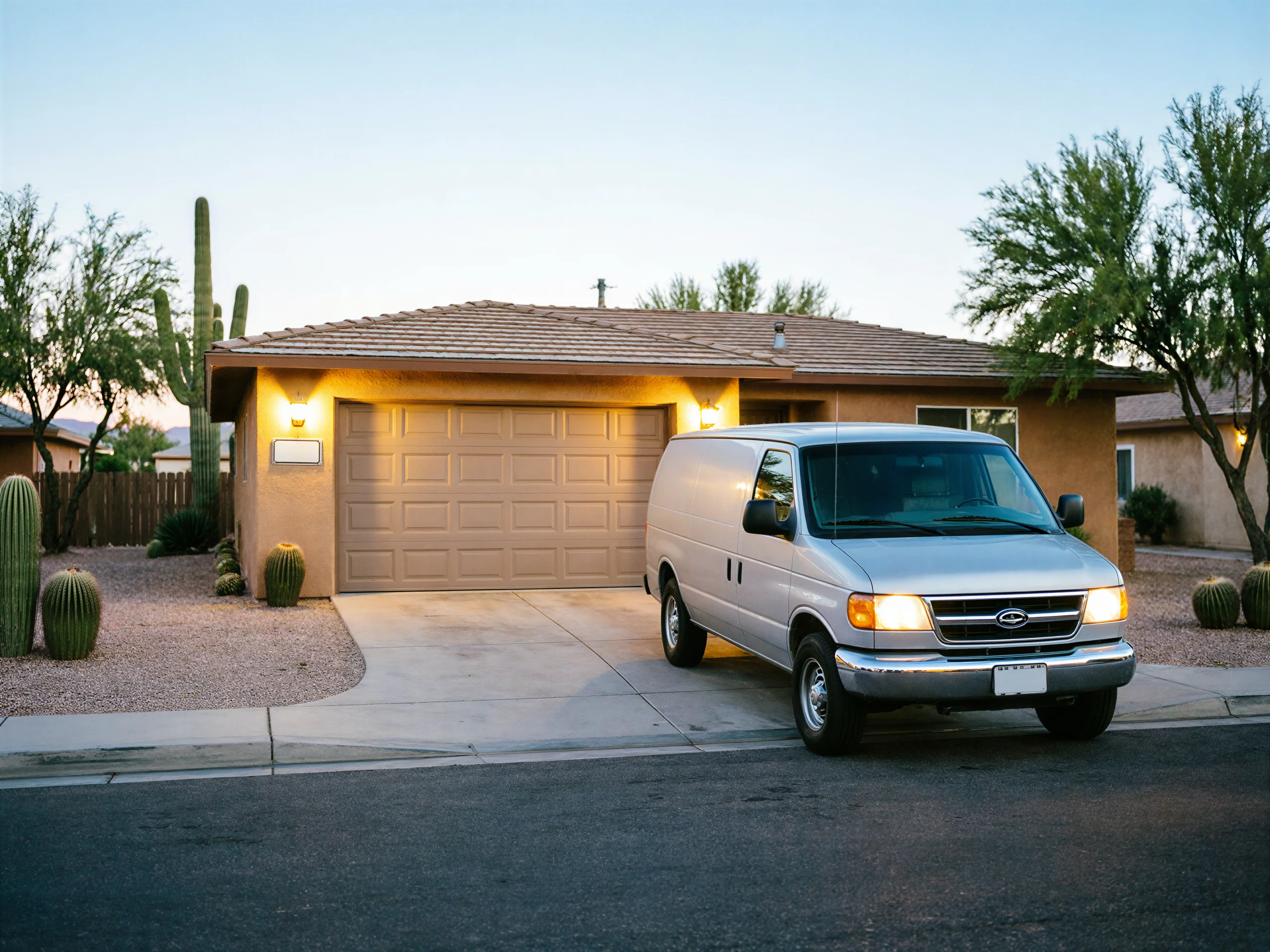
We run this route from Farmington, about 16 miles out to Waterflow, so a maintenance visit here gets scheduled rather than handled same-hour the way a call five minutes from the shop might be. That's worth knowing upfront: if you're planning a seasonal tune-up, book it a week or two before the hard freeze sets in rather than the week of. A standard maintenance visit covers spring tension, track alignment, roller and hinge condition, cable wear, and the auto-reverse safety test - the same list regardless of which town it's in, but the parts we're checking on a 1986-era door take longer to inspect carefully than they would on a door built in the last ten years.
Questions
Depends on what's worn. If it's one system - say just the rollers - maintenance and a targeted repair make sense. If the spring, rollers, and track are all showing age at once, which is common on houses from Waterflow's 1986 median build year, replacement usually costs less over a few years than repeated service calls.
Yes. Steel springs lose some tension in cold weather, and on a spring that's already decades old, that loss is more noticeable - the door feels heavier to lift, and the opener strains harder. It's a real seasonal pattern here, not just a feeling.
No, we run out of Farmington and cover Waterflow as part of the service area, about 16 miles out. That means maintenance visits here get scheduled rather than same-hour, so it's worth booking ahead of a hard freeze rather than during one.
Explore more
Ready when you are
Farmington Garage Door Pros repairs and installs garage doors, springs and openers in Farmington, NM and the surrounding area.