
Lost tension, heavy lift
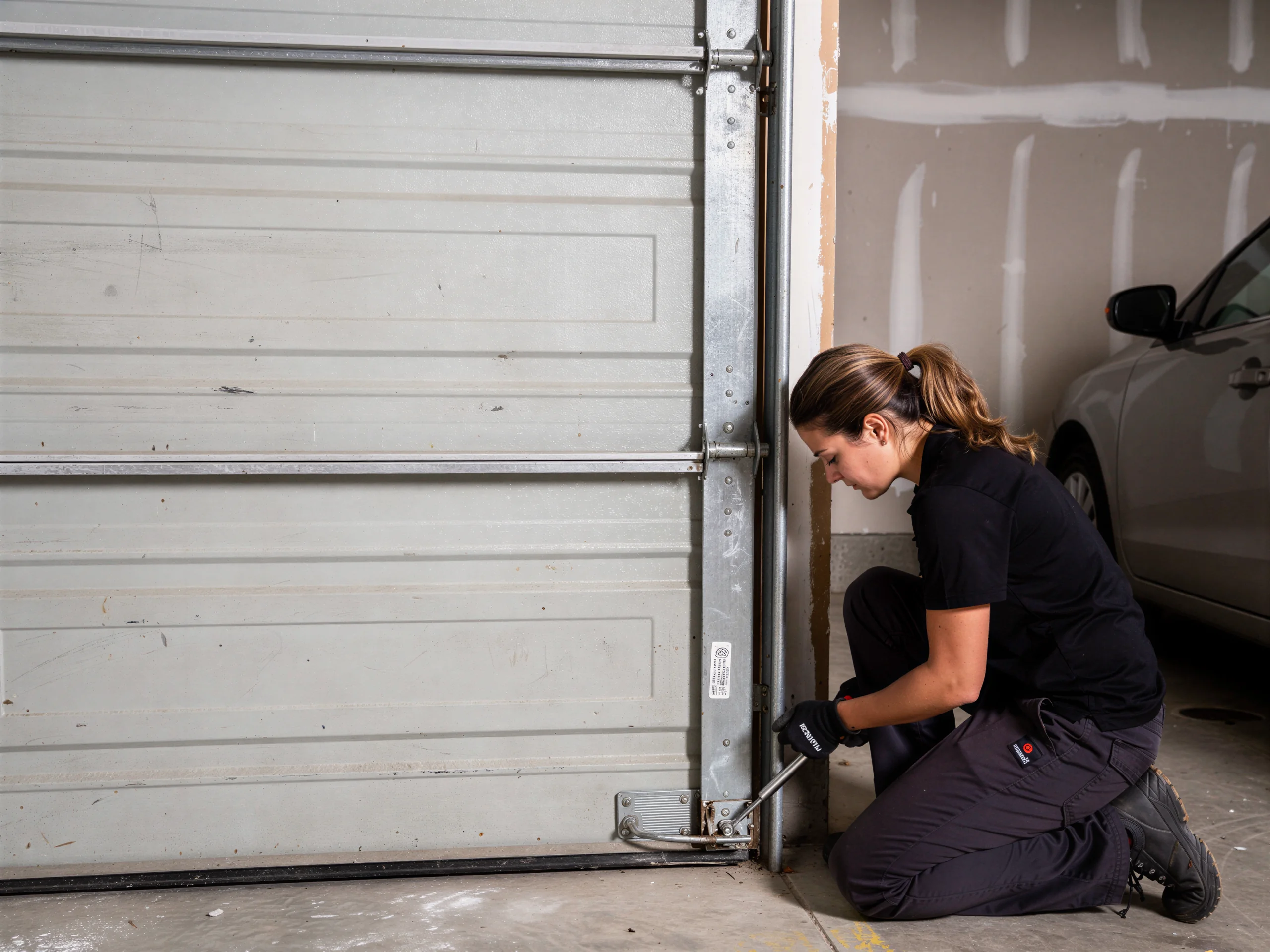
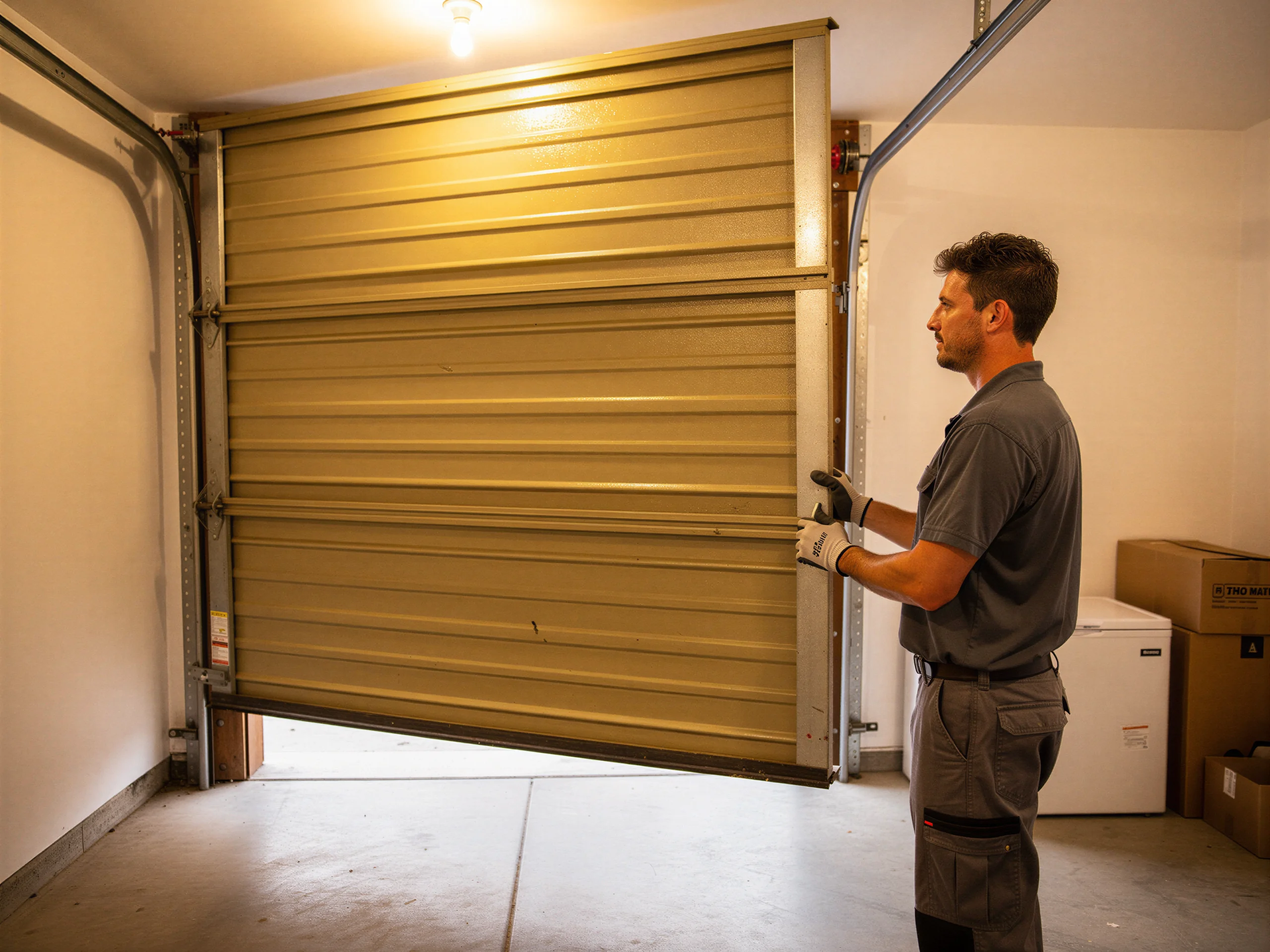
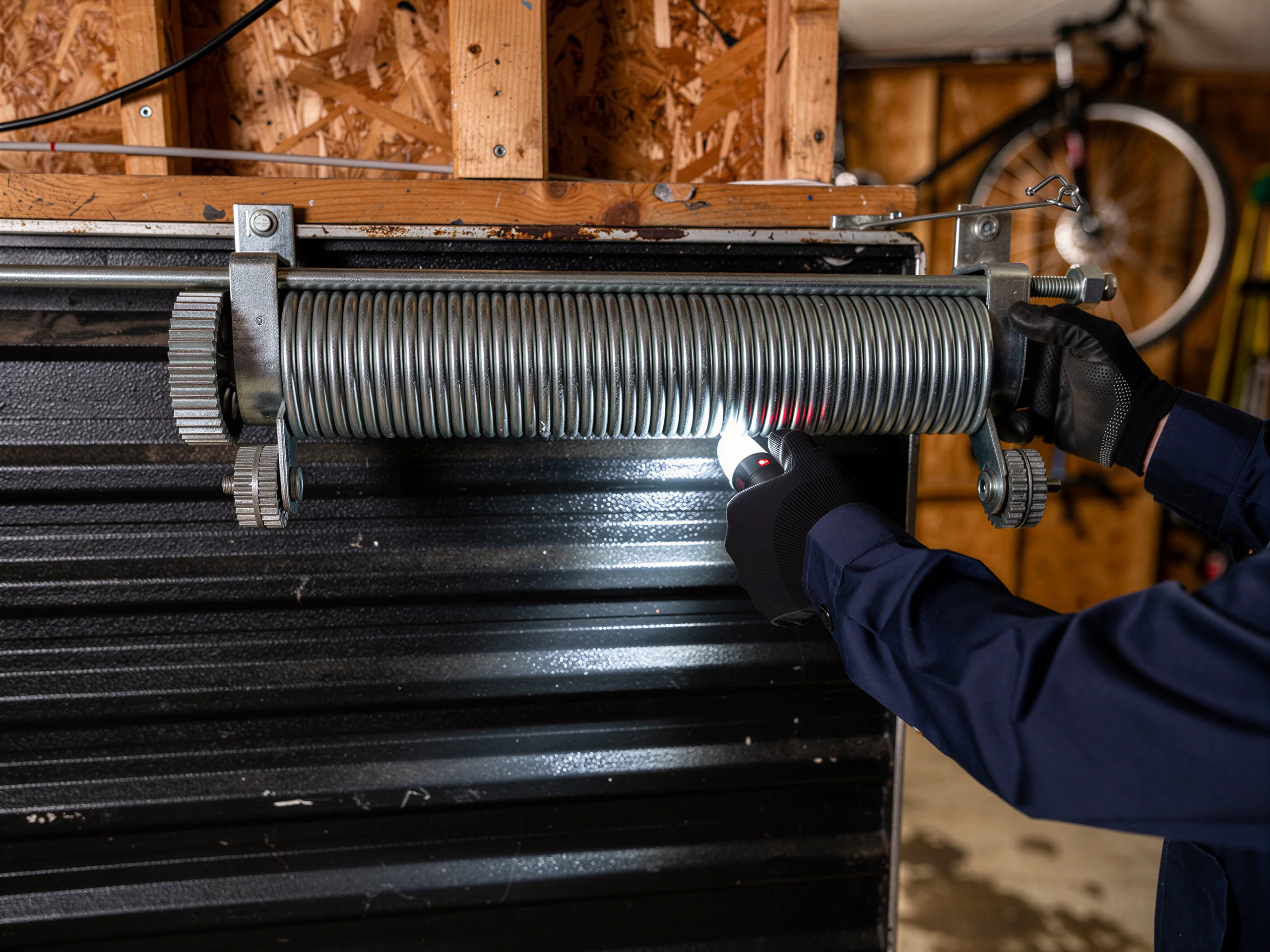
A torsion spring that's lost tension will make the door feel heavy at the bottom and the opener will strain against it. A worn roller or bent track shows up as a door that shudders or jumps a few inches in.
Farmington, NM
Garage door repair for Farmington homes built mostly between 1978 and 1993, where cold winters and original hardware combine to wear out springs and openers early.
Warning signs
If your door is slow to open, drops the last foot with a bang, or your opener grinds and then gives up halfway through the cycle, you're looking at one of a handful of failures that show up again and again in this area.
A torsion spring that's lost tension will make the door feel heavy at the bottom and the opener will strain against it. A worn roller or bent track shows up as a door that shudders or jumps a few inches in.
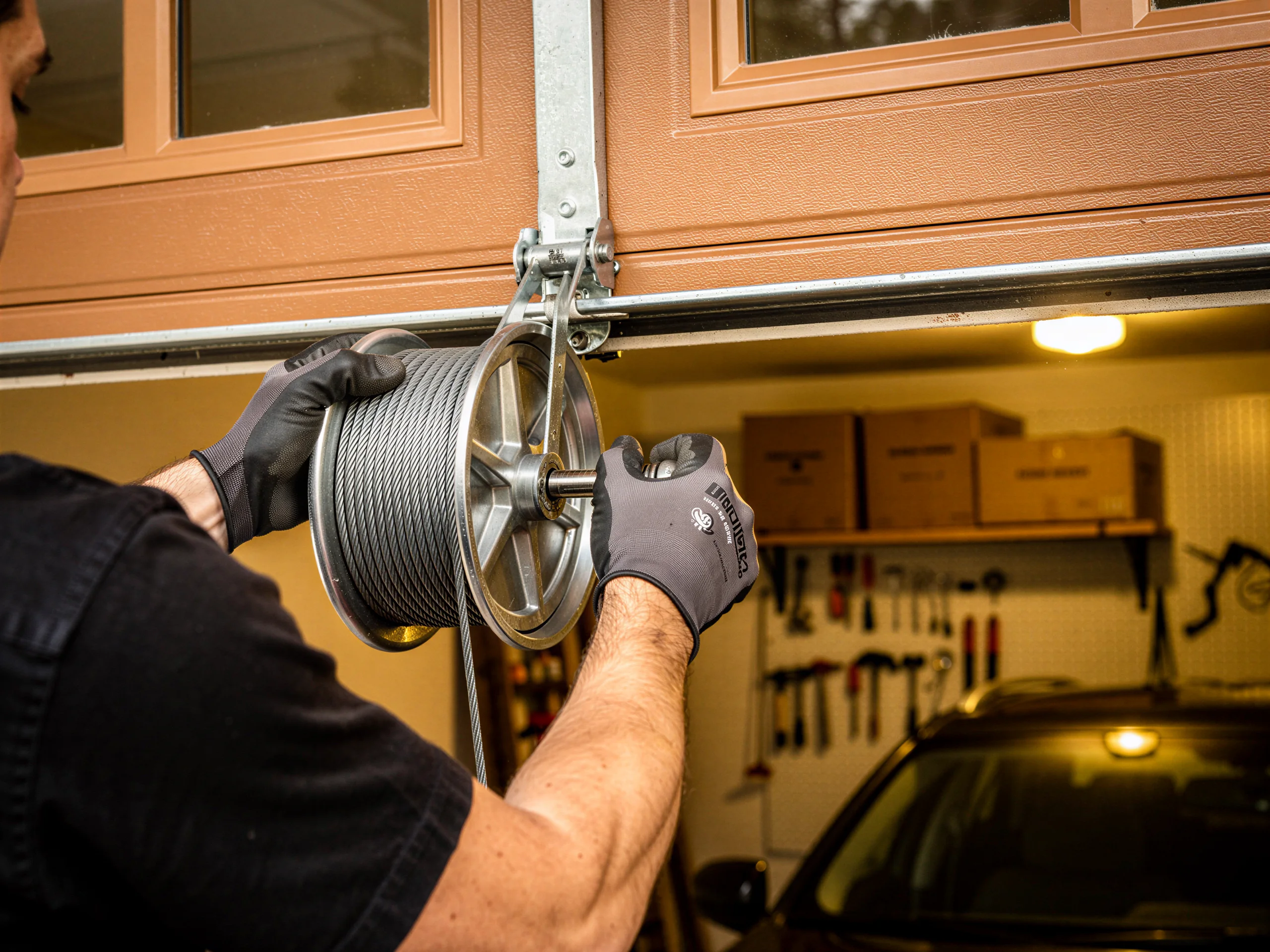
A cable that's frayed near the bottom bracket is the one that can let a door drop fast and hard - if you see fraying, stop using the door and call someone rather than run it again. Most of what we see on service calls in this area traces back to original hardware on houses from the late 1970s through early 1990s, which is when the bulk of the local housing stock went up.
That hardware is now 30 to 45 years old, and springs, rollers, and cable are wear items with a service life measured in cycles, not decades. A door that's never been serviced since the house was built is running on borrowed time by now, regardless of how it looks from the driveway.
Local causes
Two things compound each other here: the age of the housing and the climate. This is a cold-climate area with severe winter conditions, and steel springs lose tension faster when they're cycling through hard temperature swings year after year. Lubricant that's fine in July gums up or thins out by January, which means rollers and hinges are working drier and under more friction right when the metal is already stiffer from the cold. On a house built in the 1985 median window for this area, that spring has likely never been replaced - torsion springs are rated for a number of open-close cycles, not years, and a door used daily for three or four decades has probably cycled through its expected life more than once. The same goes for the opener. A lot of these houses still have the original chain-drive unit, and the gear sets in openers from that era were not built for the duty cycles or the cold-weather strain they've seen since. None of this is unique to one house - it's a pattern tied to when this stretch of Farmington and the surrounding areas like Flora Vista, Kirtland, and Aztec were built out, and what winter does to steel and lubricant year after year.
DIY or pro
Some of this is reasonable for a homeowner to handle, and some of it isn't. Lubricating hinges and rollers with the right product, tightening loose bolts on the track, and clearing debris from the track are fine to do yourself and worth doing a couple times a year, especially heading into winter.
Replacing a torsion spring is not something to take on without the right bars and a clear idea of what you're doing - these springs are wound under heavy tension and have put people in the hospital.
Same goes for cable replacement near the bottom bracket. If your opener is just not responding, check the obvious first: the wall switch wiring, the photo-eye sensors being knocked out of alignment, and the breaker.
That fixes more calls than people expect. But if the door is heavy to lift by hand with the opener disconnected, that's a spring problem, not an opener problem, and it's a call-a-pro job.
Watch-outs
The calls that turn into bigger jobs than expected usually start with someone trying to save money by only fixing the symptom. Replacing a single spring on a double door when the other one is the same age and just hasn't failed yet is a common shortcut - it almost always means a second service call within a year. Rollers that are seized or badly worn can bend the track housing them if you keep running the door, turning a $30 part into a track replacement. And on original hardware from houses in that 1978-1993 window, the track gauge and spring sizing often don't match what's sold off the shelf today, so a repair that looks simple on paper takes longer once the tech is on site matching hardware. We won't pretend every door is worth repairing - if the opener, springs, and track are all original and all near end of life at once, replacement is usually the better money than three separate repairs stacked over two years. With a median household income of $47,505 across the service area, we try to be straight about that math rather than stack calls.
Questions
Cold steel loses tension faster and lubricant thickens, so the spring and opener are both working harder right when the metal is least forgiving. This is a cold-climate service area with severe winters, and that combination wears springs out ahead of schedule, especially on original hardware from houses built in the 1978-1993 window.
If it's the original unit from when the house was built, likely yes. Most homes in this area date to the late 1970s through early 1990s, which puts a lot of original openers well past their expected gear life. Parts for some of those older units are hard to source, so replacement is often cheaper than a repair that only buys a few more months.
Yes, we cover the surrounding areas including Flora Vista (6 miles), Upper Fruitland (8 miles), Kirtland (10 miles), Bloomfield (12 miles), Aztec (12 miles), and Waterflow (16 miles).
Explore more
Ready when you are
Farmington Garage Door Pros repairs and installs garage doors, springs and openers in Farmington, NM and the surrounding area.