
Spring carries door weight
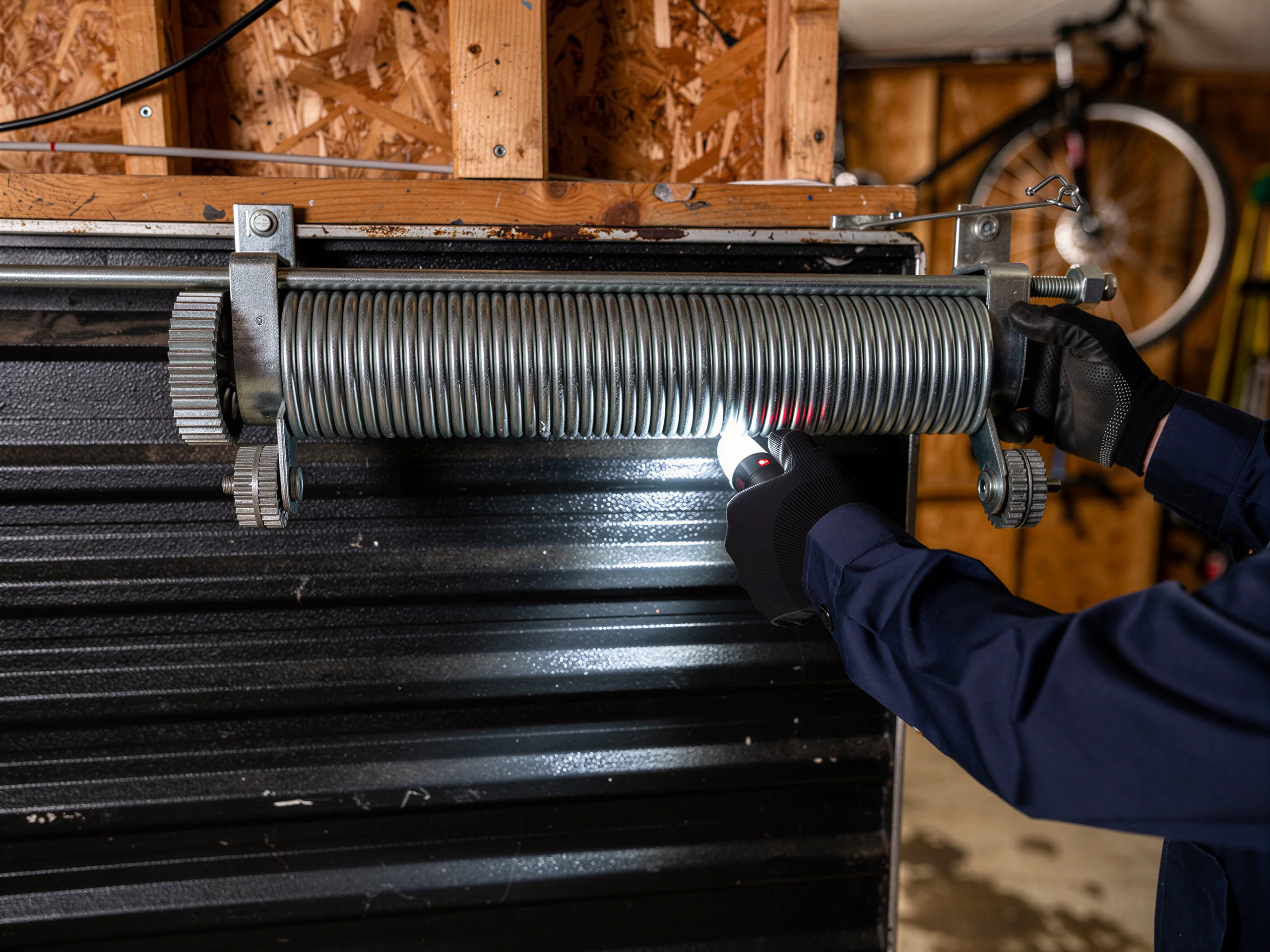
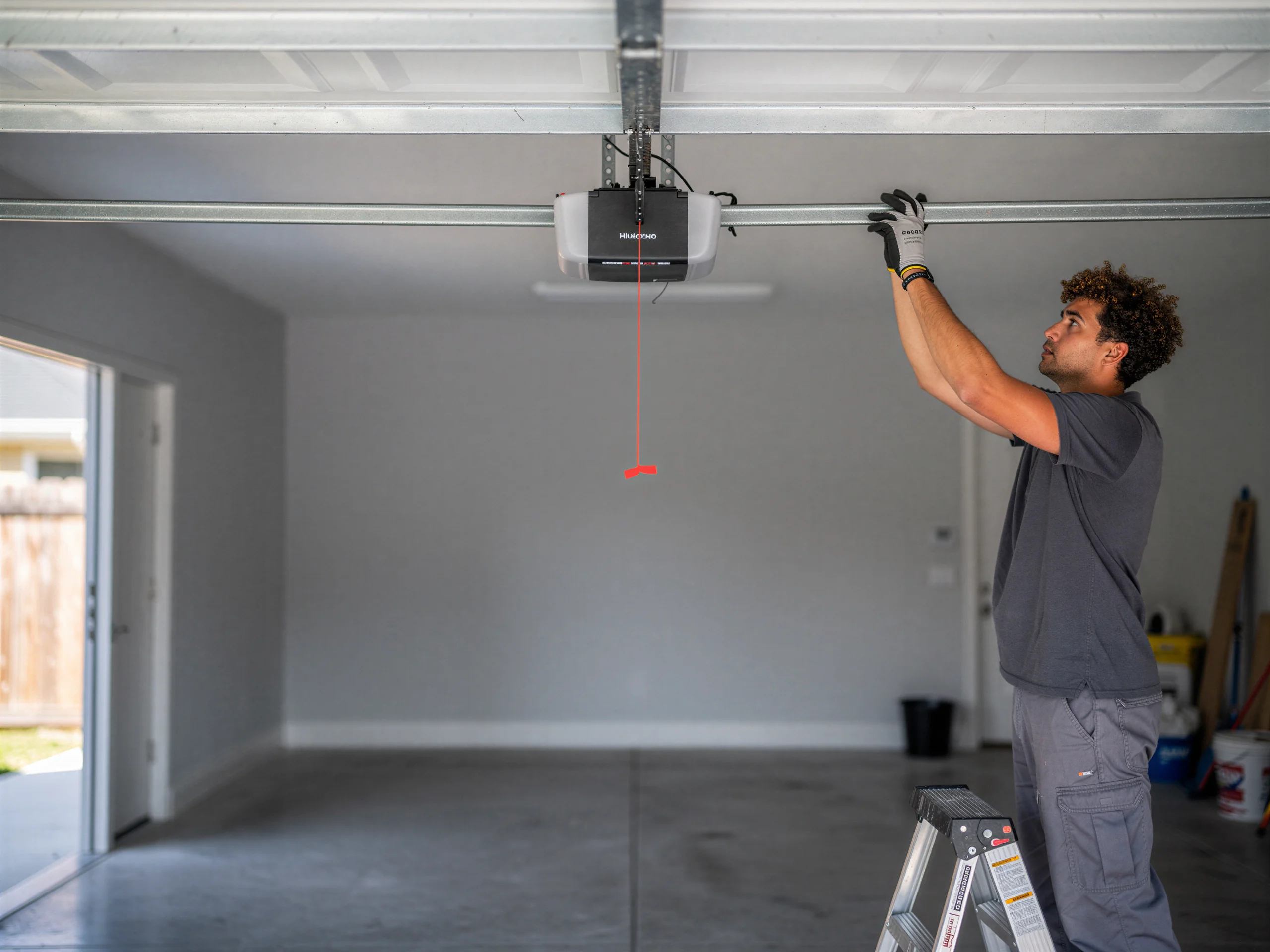
The spring sits on a shaft above the door, and it's doing most of the lifting work - the opener just guides the door, it doesn't have the muscle to haul a 150-plus pound door off the floor by itself.
Farmington, NM
Broken torsion spring on a Farmington garage door? See why 1980s-era houses here fail the same way, what it costs you to wait, and when a repair is the wrong call.
Warning signs
If the door won't lift, or it lifts a few inches and stops, or you hear a bang like a gunshot from the garage, you're probably looking at a broken torsion spring.
The spring sits on a shaft above the door, and it's doing most of the lifting work - the opener just guides the door, it doesn't have the muscle to haul a 150-plus pound door off the floor by itself.
Once that spring snaps, the opener will strain, the gears inside it can strip, and some people make it worse by forcing the door open by hand and bending a track in the process. You'll sometimes see one spring still intact on a two-spring setup. That door looks like it's working but it isn't - it's running on half the lift it needs, which wears the second spring and the cables faster.
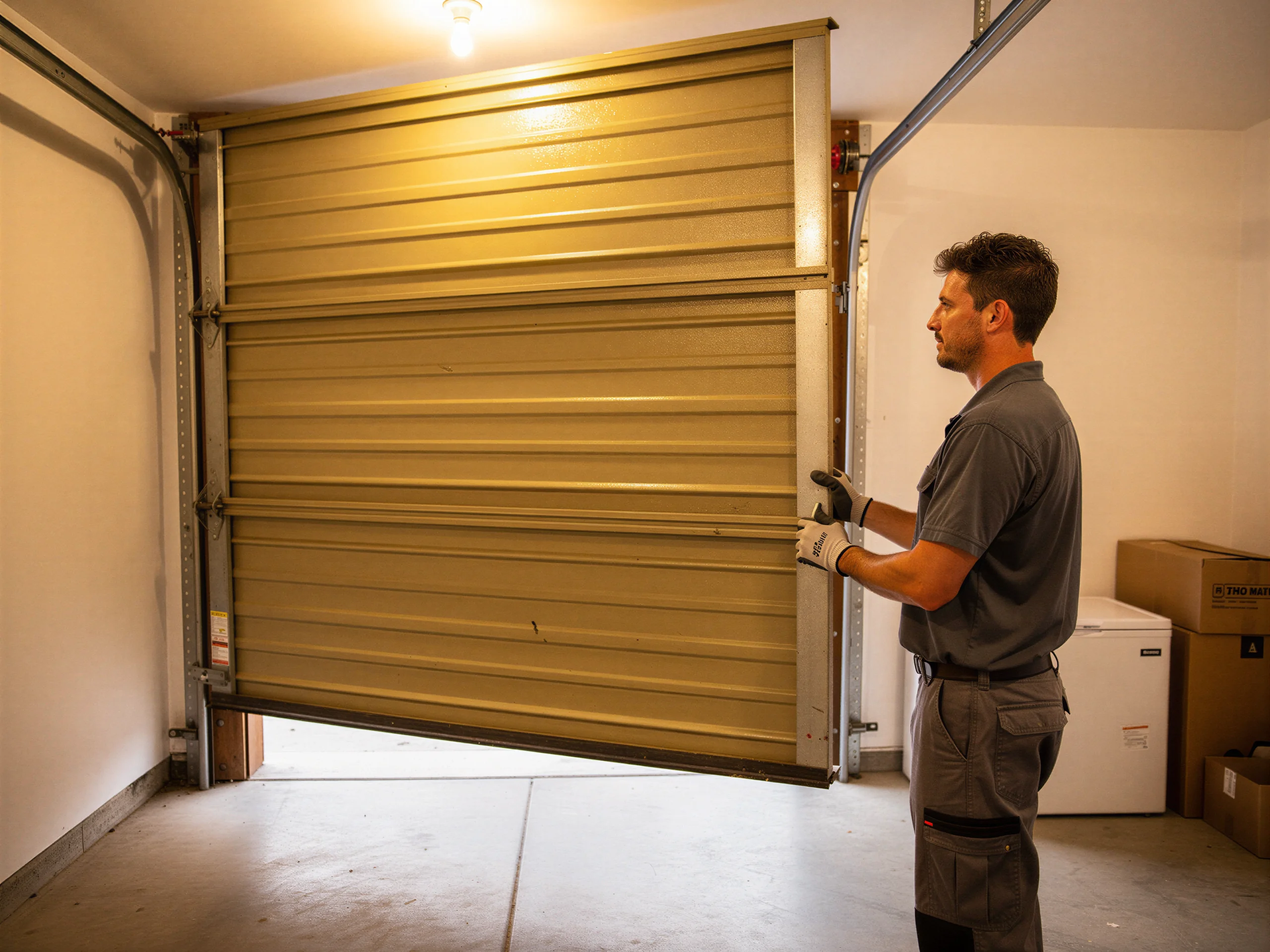
A door that's noticeably heavier to lift by hand, or hangs crooked when you disconnect the opener, is telling you the same thing before it fully lets go. Catching it at that stage is cheaper than catching it after the cable jumps the drum or the door comes down on something.
Local causes
Torsion springs are rated for a number of open-close cycles, and in a cold, severe climate band like this one, cold steel flexes less and fatigues faster than it would somewhere mild - that's a real factor here, not a general claim about springs everywhere. Most of the houses we work on were built between 1978 and 1993, with a median year of 1985, and across the six areas we run calls in - Flora Vista, Upper Fruitland, Kirtland, Bloomfield, Aztec, and Waterflow - that same 1980s-to-90s stock dominates. Springs installed with the original build, or replaced once in the 2000s, are well past their rated cycle count by now.
That means a lot of the springs failing right now aren't failing because of bad luck or a bad part - they're failing because they're roughly 30 to 45 years into a system rated for a fraction of that service life, run through decades of winter temperature swings. A house built in 1985 and a house built in 1990 are going to need this same repair around the same calendar window, which is exactly the pattern we see call after call.
DIY or pro
We'll say it straight: don't. A wound torsion spring stores enough energy to break fingers, fracture a skull, or put a winding bar through drywall if it slips off the shaft.
This isn't like changing a light fixture where the worst case is a tripped breaker. The tools for a safe spring swap - winding bars, vise grips rated for the shaft, a way to measure wire size and wind count correctly - aren't things most households own, and guessing on spring size gets you a door that's either too light to stay shut or too heavy for the opener.
What you can safely do is diagnose it. Pull the emergency release cord, try lifting the door by hand, and if it's dead weight or wildly uneven side to side, that confirms a spring problem rather than an opener problem.
Note whether it's a one-spring or two-spring setup before you call - it changes the job. Past that point, this is a call-a-pro repair, not a weekend project, and any shop that tells you otherwise is being careless with your safety, not generous with your time.
Watch-outs
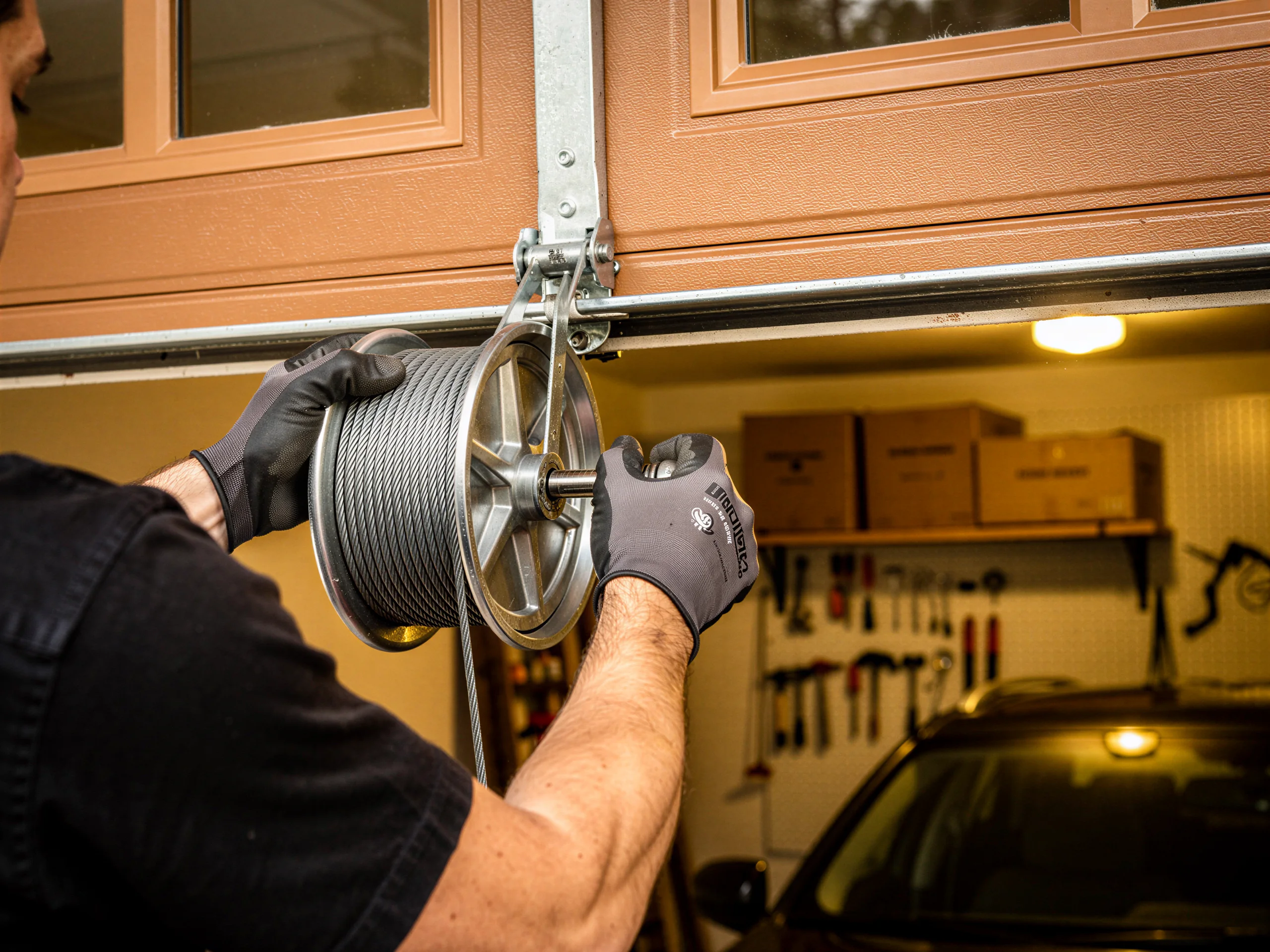
The spring itself is rarely the whole story. On a door that's been limping along on a half-dead spring for weeks, the cables have usually been carrying load they weren't built for, and they're often frayed or stretched by the time we get there.
Swap the spring and leave a worn cable alone, and you've traded a spring call for a cable call a month later. Drums and bearing plates take the same abuse and are worth a look at the same visit. The other place it goes sideways is sizing.
Springs are matched to door weight, and weight changes - a heavier insulated replacement door, added hardware, even a new opener with different lift characteristics, can leave an otherwise correct spring undersized. In a service area where median household income runs $47,505 and a large share of the 2,935 owner-occupied houses are original 1980s-90s builds, we see plenty of people trying to stretch one more year out of original hardware that's simply aged out.
Sometimes that's the right call. Sometimes the honest answer is that a spring-only fix is a band-aid and the opener or the door itself needs attention too - we'll tell you which one you're looking at before we start, not after.
Questions
We don't have a fixed time posted here since it depends on whether it's a one-spring or two-spring system and what else needs attention once the door's open, but it's a same-visit repair in the great majority of cases, not a multi-day job.
Steel gets less flexible as temperatures drop, and a spring near the end of its rated cycle count is more likely to snap under that added stress. This region sits in a cold, severe climate band, so winter is genuinely a higher-failure window here than it would be somewhere with milder winters.
If the spring failure happened alongside a bent track, a rusted-through panel, or an opener that's already failing, patching just the spring can mean paying for parts twice. We'll look at the whole door, not just the spring, before recommending which way to go.
You can, but the second spring is usually close behind it in age and wear, and running mismatched springs puts uneven strain on the door. Most shops will tell you honestly when the second one is close enough to failure that doing both now saves you a second service call.
Explore more
Ready when you are
Farmington Garage Door Pros repairs and installs garage doors, springs and openers in Farmington, NM and the surrounding area.