Blog
Why Farmington's 1980s Housing Stock Needs Different Garage Door Care
Farmington Garage Door Pros fixes torsion springs and openers on 1978-1993 built homes across Farmington, NM, where cold winters stress original hardware.
How Local Conditions Play In
Most of the houses we work on in the Farmington area went up between 1978 and 1993, with the median build year landing right at 1985. That matters more than people think. A door and opener installed when a house was framed is now pushing forty years old in a lot of cases, and the hardware from that era wasn't built for the number of open-close cycles it's seen since.
Farmington sits in a severe cold climate band, and that changes what breaks and when. Steel contracts in deep cold, which tightens tolerances on tracks and rollers that were already worn. Torsion springs lose tension faster when they cycle through big temperature swings year after year, and lubricant that worked fine in October turns gummy in January, making the opener strain against resistance it shouldn't have to fight.
Across the six areas we run calls in, the pattern repeats: 1980s and 90s construction, original or near-original garage door hardware, and a climate that doesn't go easy on either one. We see the same failure points over and over because the houses and the weather are doing the same thing to every door on the block.
When to Call Someone
If your door is original to a house built in the late 1970s through early 1990s, the springs have likely already been replaced once, maybe twice. A torsion spring on a standard door is rated for a set number of cycles, and a house that age has gone through more open-close cycles than that rating covers. A spring that's groaning, slow to lift, or visibly stretched on one side is close to failing, not far from it.
Cold-weather symptoms are worth paying attention to separately. If the door starts fighting the opener only in winter, that's usually hardware that's tightened up with the cold, not a dying motor. Don't keep forcing the opener through resistance - that's how you burn out a drive gear that didn't need to go.
Here's the honest limitation: if a door is original to a 1980s build and the track is bent, the drum is worn, and the spring is shot all at once, we're not going to tell you to replace one part and hope. At that point you're paying labor three times instead of once, and a full door replacement usually costs less over the next five years than three separate emergency calls.
The Situation
The service area runs about 6,936 households, with 2,935 of those being owner-occupied houses - so roughly 42% of households own rather than rent, which is the group most likely to maintain their own garage door rather than call a landlord. Median household income here is $47,505, and that number shapes a lot of the calls we get: people want the door fixed right, but they're also asking what it'll cost before they ask how fast we can get there.
We cover a wide stretch of ground around Farmington. Flora Vista is about six miles out, Upper Fruitland around eight, Kirtland ten, Bloomfield and Aztec both around twelve, and Waterflow out at sixteen. That spread means the housing stock isn't identical door to door - some of these areas lean a little older, some a little newer within that 1978-1993 window - but the core problem is the same: aging hardware in a climate that doesn't let it coast.
When income and house age line up the way they do here, repair-first makes sense more often than full replacement, at least until the damage says otherwise.
What Most People Get Wrong
The biggest mistake we see is treating a noisy door as a lubrication problem when it's a structural one. On a house built in the 1980s or early 90s, grinding or popping noises are more often a worn roller bearing or a bent track section than dry hinges. WD-40 will quiet it down for a week and mask exactly what's failing underneath.
The second mistake is assuming the opener is the problem when the door is the problem. If a motor strains to lift a door, the first thing to check is spring balance, not the motor itself. Replacing a perfectly good opener because a tired spring made it work harder than it should is money spent in the wrong place.
The third is waiting through a whole winter on a door that's already dragging, figuring it'll hold until spring. Cold makes marginal hardware worse, not better, and a spring or cable that's one bad cycle from snapping in October is a bigger problem by February. Given how much of our local housing dates to the same twenty-year window, these aren't rare, one-off issues - they're the predictable result of age and climate working on the same hardware at the same time.
Questions
Common questions
My house was built in the mid-1980s and the door has never been replaced. Is that normal?
It's common here. Our service area's median build year is 1985, and a lot of original doors and openers are still in place on houses from that window. Normal doesn't mean fine, though - hardware that old has usually been through more cycles than it was rated for, and it's worth a look before it fails on its own schedule.
Why does my garage door get harder to open in winter?
Farmington sits in a severe cold climate band, and cold tightens metal tolerances on tracks and rollers while thickening old lubricant. If a door only struggles in winter, that's usually hardware reacting to temperature, not a dying opener motor. Forcing it through the resistance is what actually damages the opener.
Should I repair or replace a door that's original to my house?
Depends what's failing. If it's one part - a spring, a cable - repair makes sense. If the track is bent, the drum is worn, and the spring is shot together, which happens on original 1980s-90s doors, replacement usually costs less over time than paying for separate emergency repairs on each part.
Recommendation
You Might Also Like
More garage door guides for Farmington homeowners.
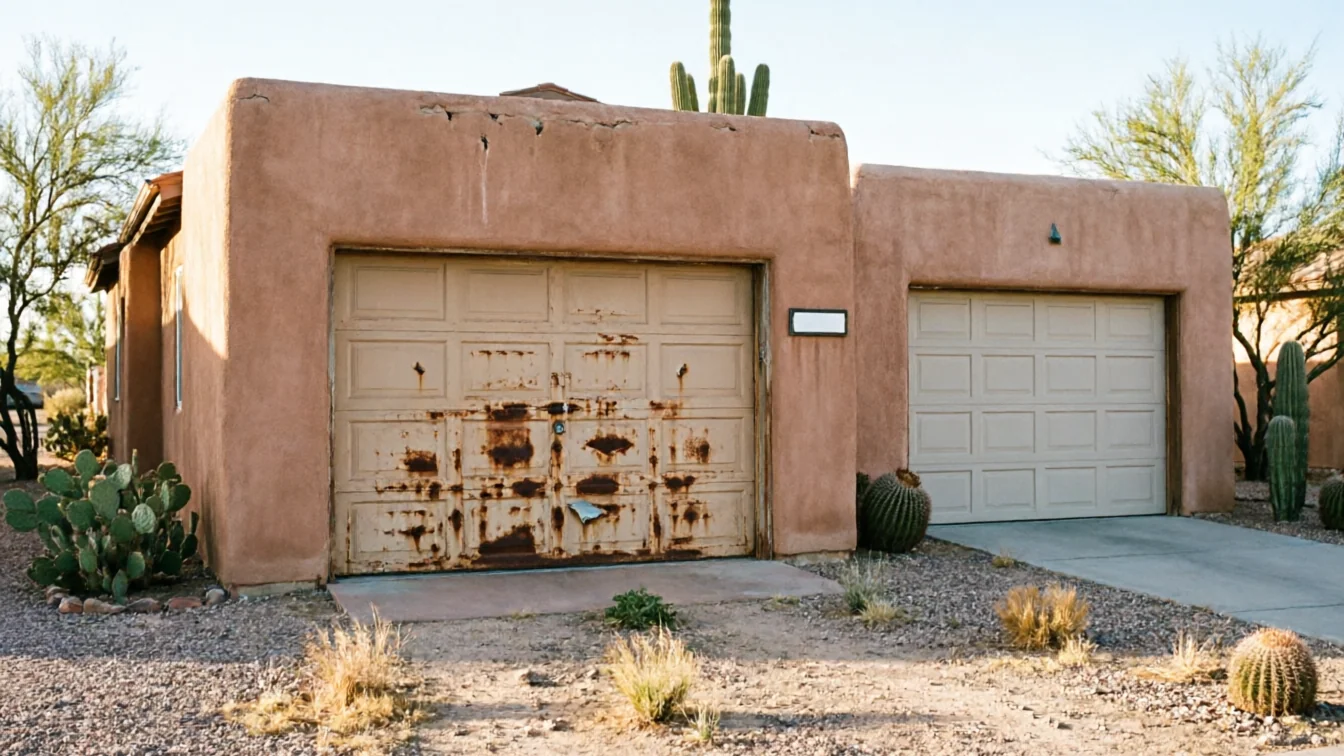
What We Actually Check When We Come to Your Door
A look at what a real service call covers for Farmington homes built 1978-1993, where cold winters and original hardware shape the job.
Read guide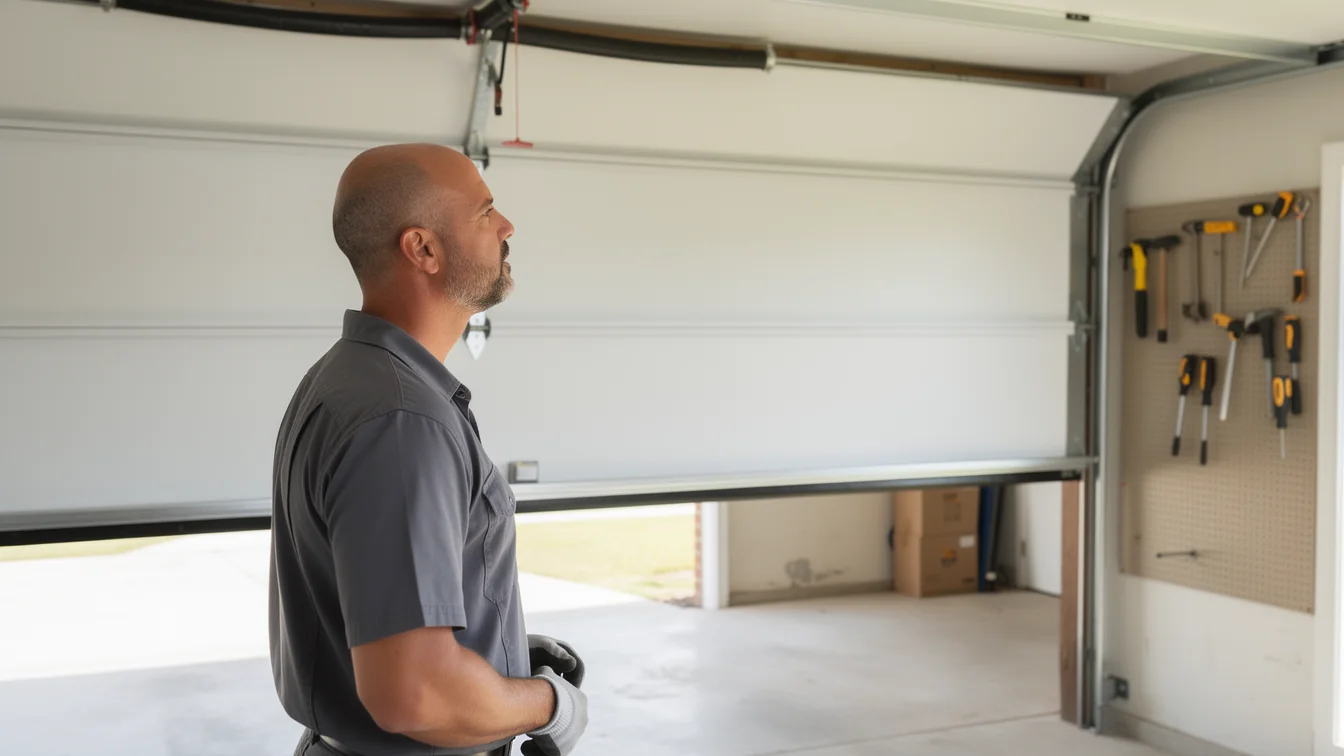
Why Cold Mornings Break Springs on Farmington's Older Doors
Why torsion springs on Farmington's 1978-1993 housing stock fail more often in severe cold, what the warning signs look like, and when a repair call is worth it.
Read guide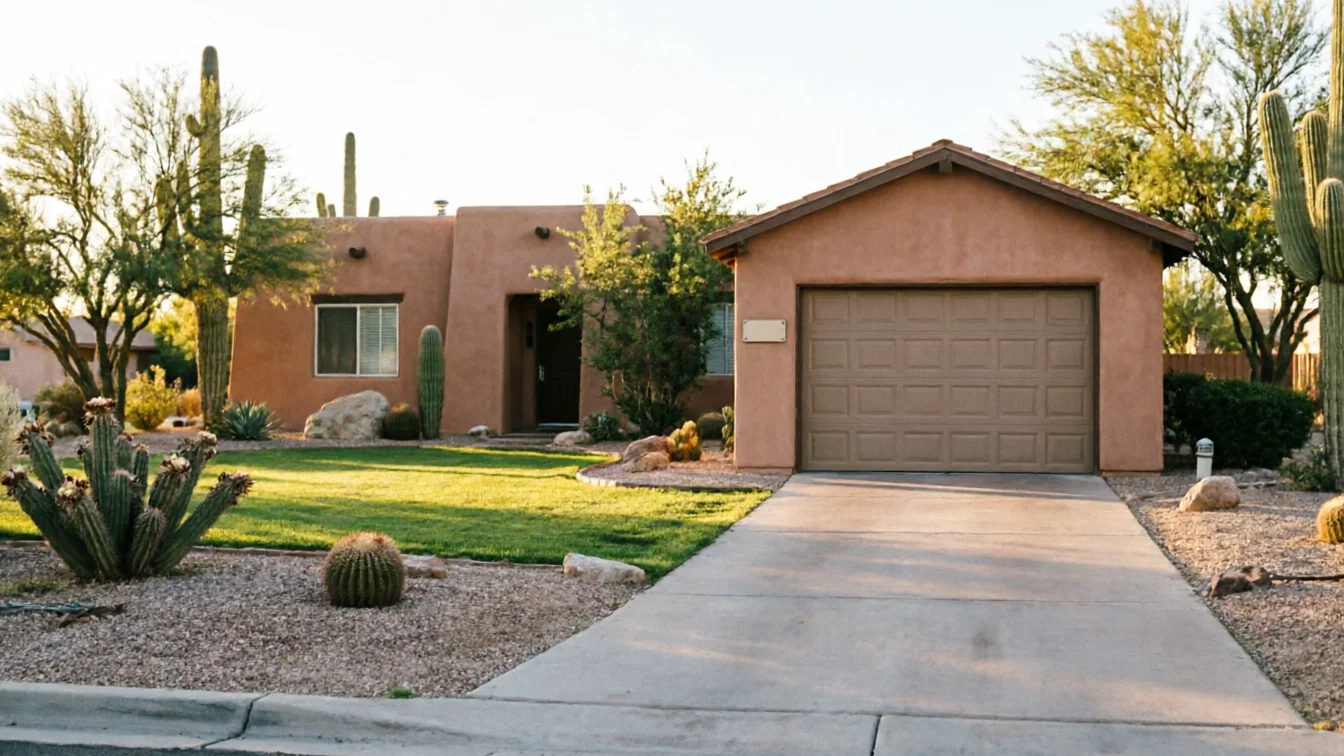
When the Power Goes Out: Openers in Farmington's 1980s Garages
How Farmington's 1980s-built houses and cold-severe winters affect garage door openers, and what actually fails when the power drops or the cold sets in.
Read guideReady when you are
Need a garage door sorted in Farmington?
Farmington Garage Door Pros repairs and installs garage doors, springs and openers in Farmington, NM and the surrounding area.