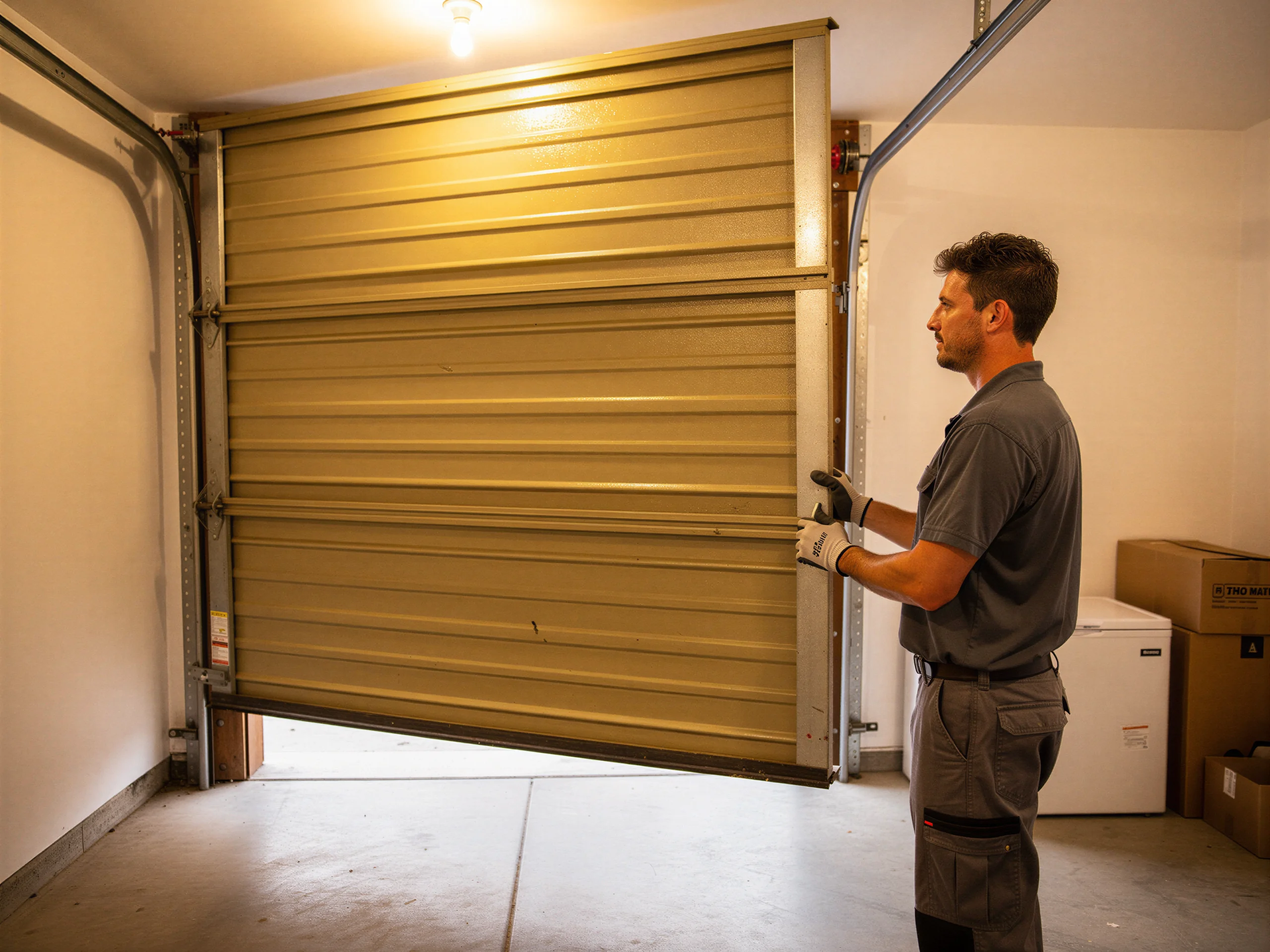
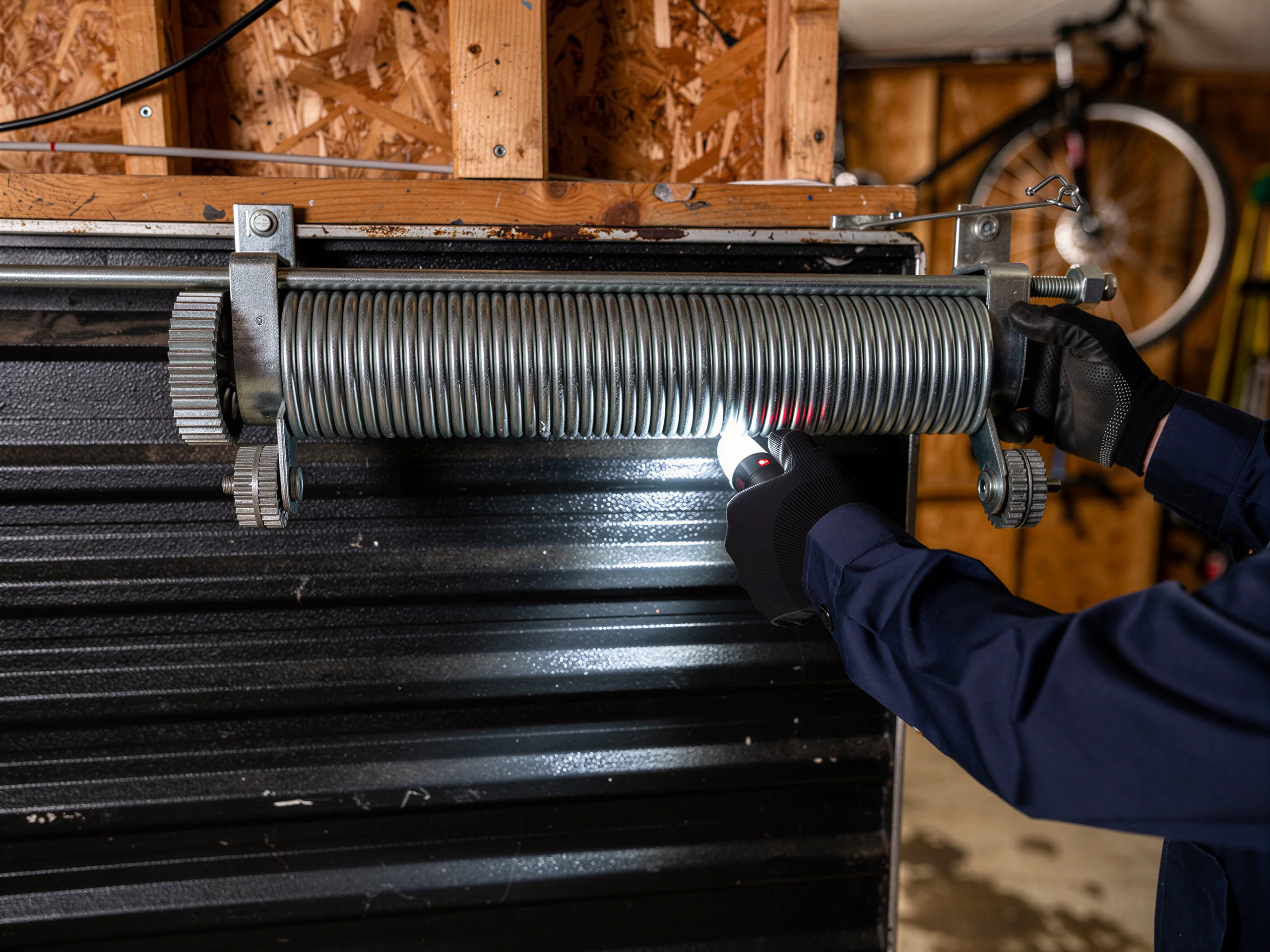
Farmington sits in a cold-severe climate band, and that matters more for garage doors than people expect. Steel springs and steel tracks contract in cold weather, and a spring that's already near the end of its cycle life will often snap on the first hard cold snap of the season rather than failing on a mild day. That's why late fall and early winter are when we see the most spring calls. Cold also stiffens the grease in rollers and hinges, so a door that worked fine in September can start binding or jumping the track in December with no other change.
Layer that on top of the housing stock and you get a predictable pattern: a 1985-built house with its original torsion spring hits year 35 to 40 right around a cold stretch, and the spring goes. Panels built to that era's standards also tend to be thinner steel than what's installed today, so they dent and warp more easily when a door comes off track and gets forced. None of this is unique to one street - it's just what happens when a whole area's housing went up in the same 15-year window and the climate puts real stress on steel every winter.