
Silence after button press
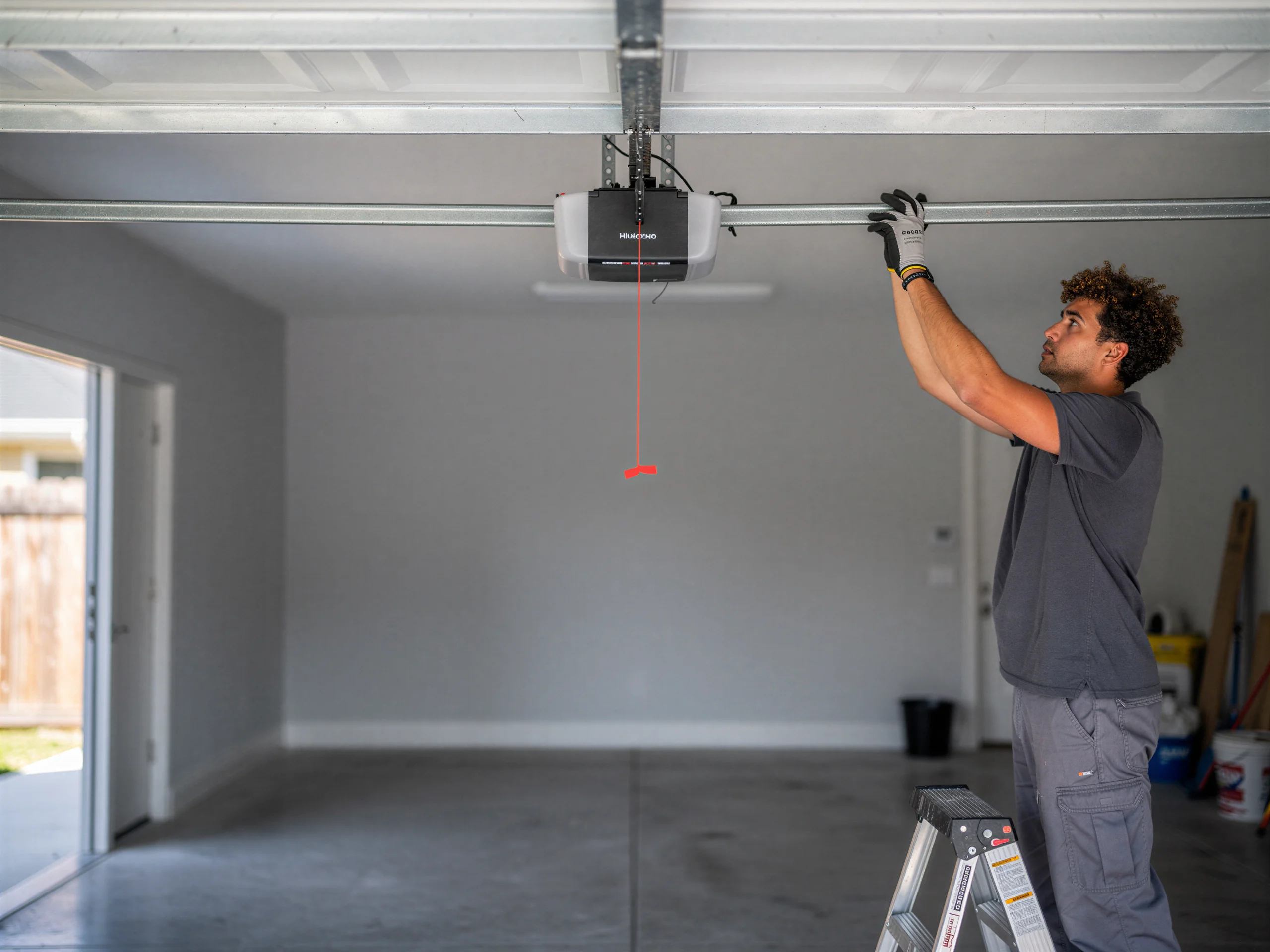
Sometimes it's just silence when you hit the button. On a lot of these calls the opener itself isn't dead - it's one part of it. A stripped drive gear inside the housing will let the motor run while the trolley sits still.
Farmington, NM
Opener repair for Farmington homes built mostly 1978-1993, where cold winters and original hardware combine to wear out drive gears, logic boards, and safety sensors early.
Warning signs
Most calls start the same way: the opener hums but the door doesn't move, or it moves a few inches and reverses, or the remote works from the driveway but not from inside the car.
Sometimes it's just silence when you hit the button. On a lot of these calls the opener itself isn't dead - it's one part of it. A stripped drive gear inside the housing will let the motor run while the trolley sits still.
A failing logic board can make the unit cycle open and shut on its own, or ignore the wall button but answer the remote. Worn safety sensors near the floor, especially ones that have been nudged out of alignment by a parked bike or a shop vac, will stop the door from closing at all and just blink a light at you.
We work across the Farmington service area - Flora Vista, Upper Fruitland, Kirtland, Bloomfield, Aztec, and Waterflow included - and the opener failures we see track pretty closely with how old the house is and what the winter did to the garage that year. A dead opener on a 1985-built house is a different repair than the same complaint on a house built last decade, mostly because of what's bolted to the header above it.
Local causes
Housing in this area mostly went up between 1978 and 1993, with a median build year around 1985, and that stock spans six named communities in the service area. Openers from that era, and even the replacement units installed in the 1990s and 2000s that match that housing cycle, are now well past the point where gears, capacitors, and circuit boards are expected to hold up. A chain-drive unit that's 20-plus years old doesn't fail gracefully - it fails when a temperature swing finds the one weak solder joint or the one gear tooth that was already half gone.
That temperature swing is the other half of it. This is a cold, severe climate band, and an unheated or uninsulated garage puts the opener's motor, logic board, and lubricant through a wide range every single day in winter. Grease inside the gear housing thickens in the cold and makes the motor work harder to turn the same gear it turned fine in July. Circuit boards that tolerate heat fine can develop condensation issues when a warm afternoon is followed by a hard overnight freeze, which is a normal week here. None of this is dramatic - it's slow wear, concentrated by both the age of the equipment and the swing in temperature the whole area gets.
DIY or pro
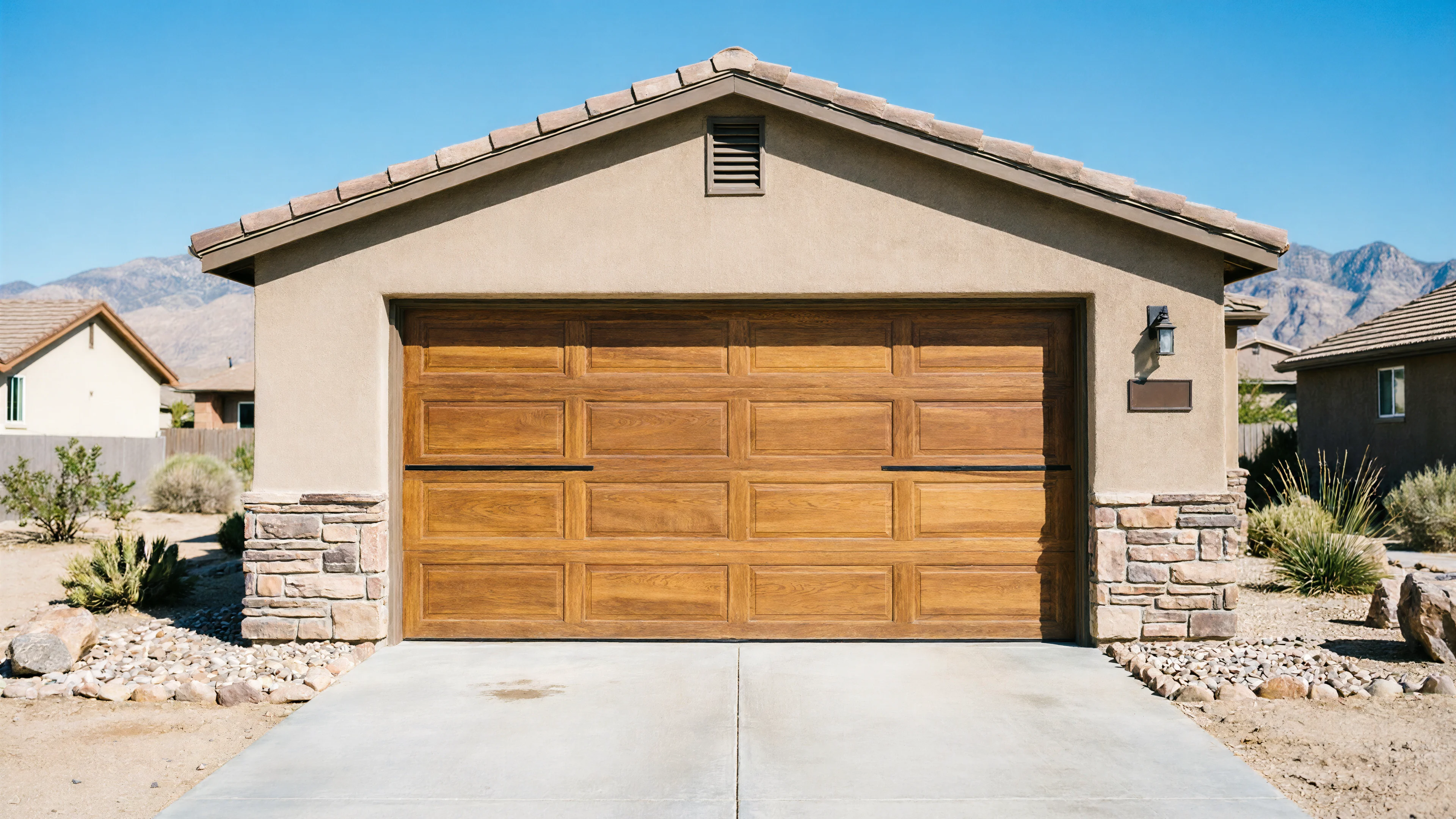
Some of this is simple. If the door won't close and a light blinks on the opener, check the two safety sensors near the floor on each side of the track first - a misaligned sensor, a spiderweb across the lens, or low sun hitting one of them at the wrong angle will stop the door from closing and it's a five-minute fix once you spot it.
Dead remote batteries and a wall button that's lost its programming are also things worth checking before you call anyone. What you shouldn't take apart yourself is the gear housing on the motor unit, or anything involving the logic board.
Those require the housing to be opened and the part sourced to match the model, and on an opener old enough to match this area's 1980s-90s housing stock, that part may not be stocked locally or may not exist anymore, which sometimes means replacing the unit rather than repairing it.
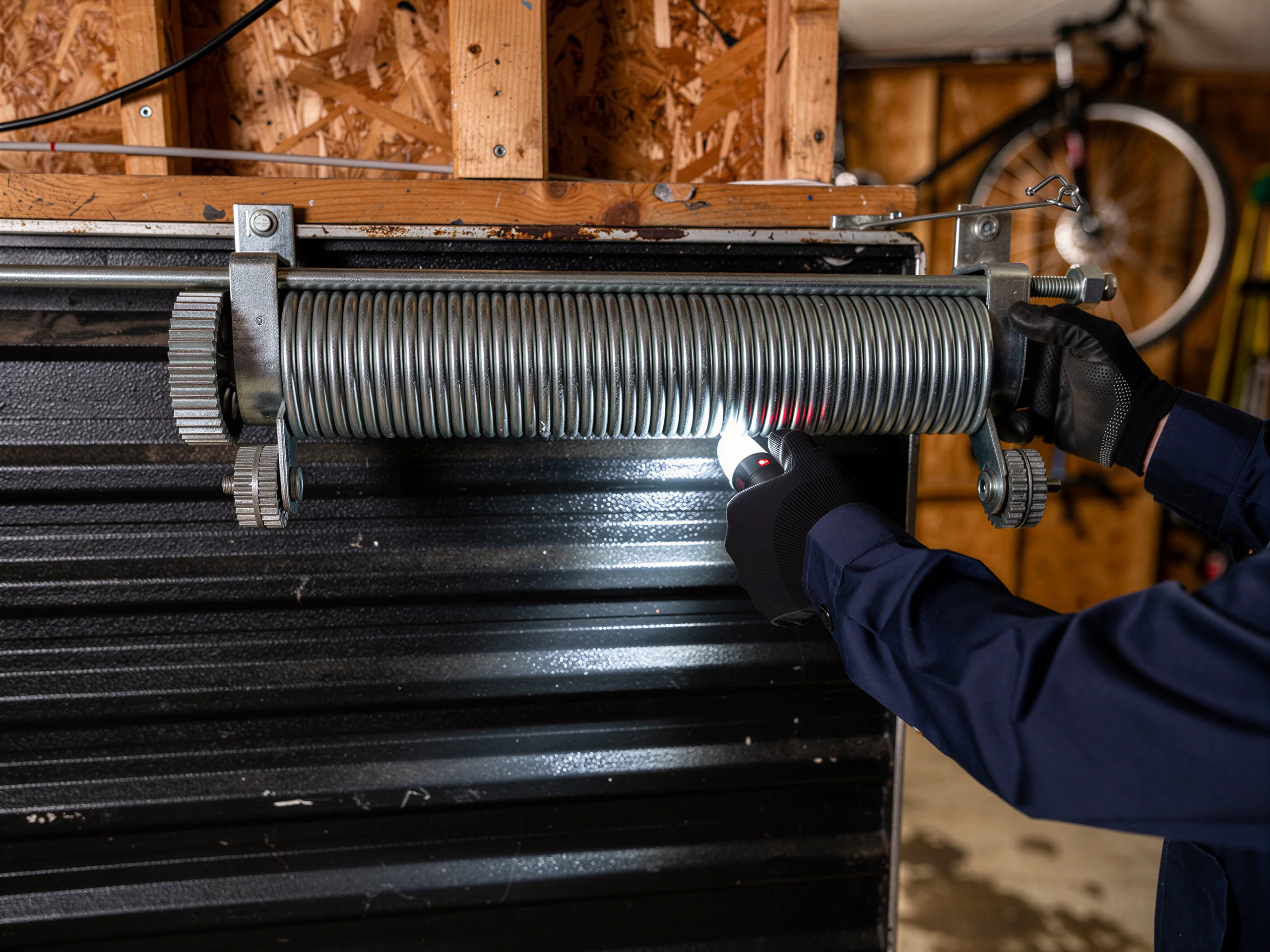
We'll tell you straight if that's where your job is headed instead of billing you for a repair that won't hold. Don't touch the torsion spring or anything on the door side of the track as a DIY project - that's a different system, under real tension, and it's not part of opener troubleshooting.
Watch-outs
The repair that looks easy and isn't: an opener that's cycling or reversing intermittently, especially in cold weather, where the cause isn't the sensors or the gear but a logic board that's failing under temperature stress.
That kind of fault can test fine on a 60-degree afternoon and act up again the next cold morning, which means a quick daytime visit sometimes can't reproduce what you're describing on the phone.
The other place it goes sideways is parts availability for openers that match this area's older housing stock. A unit installed when a house went up in the late 1980s may be a model that's no longer made, and finding a matching logic board or gear kit isn't always possible.
At that point we're honest that a repair isn't the better call - a new opener often costs less than chasing parts for one that's 30-plus years old, and it comes with a motor and board rated for the kind of cold winters this area gets rather than whatever happened to ship in 1988.
Questions
Cold thickens the grease in the opener's gear housing and makes the motor work harder, and temperature swings between a warm afternoon and an overnight freeze put stress on circuit boards. In this climate band, that daily swing is normal through the winter months, which is why intermittent opener faults often show up only in cold weather.
Sometimes. If it's a gear or sensor issue, often yes. If the logic board has failed on a unit that old, matching parts can be hard to find since a lot of housing in this area dates to that same 1978-1993 build window and the openers installed then are well past their expected life. We'll check before promising a repair we can't deliver.
Check the two safety sensors near the floor first - misalignment, a cobweb, or direct sun on one lens will cause a reversal every time and it's usually a quick fix. If both sensors are clean and aligned and it still reverses, the issue is more likely in the opener's logic board or travel limit settings.
Explore more
Ready when you are
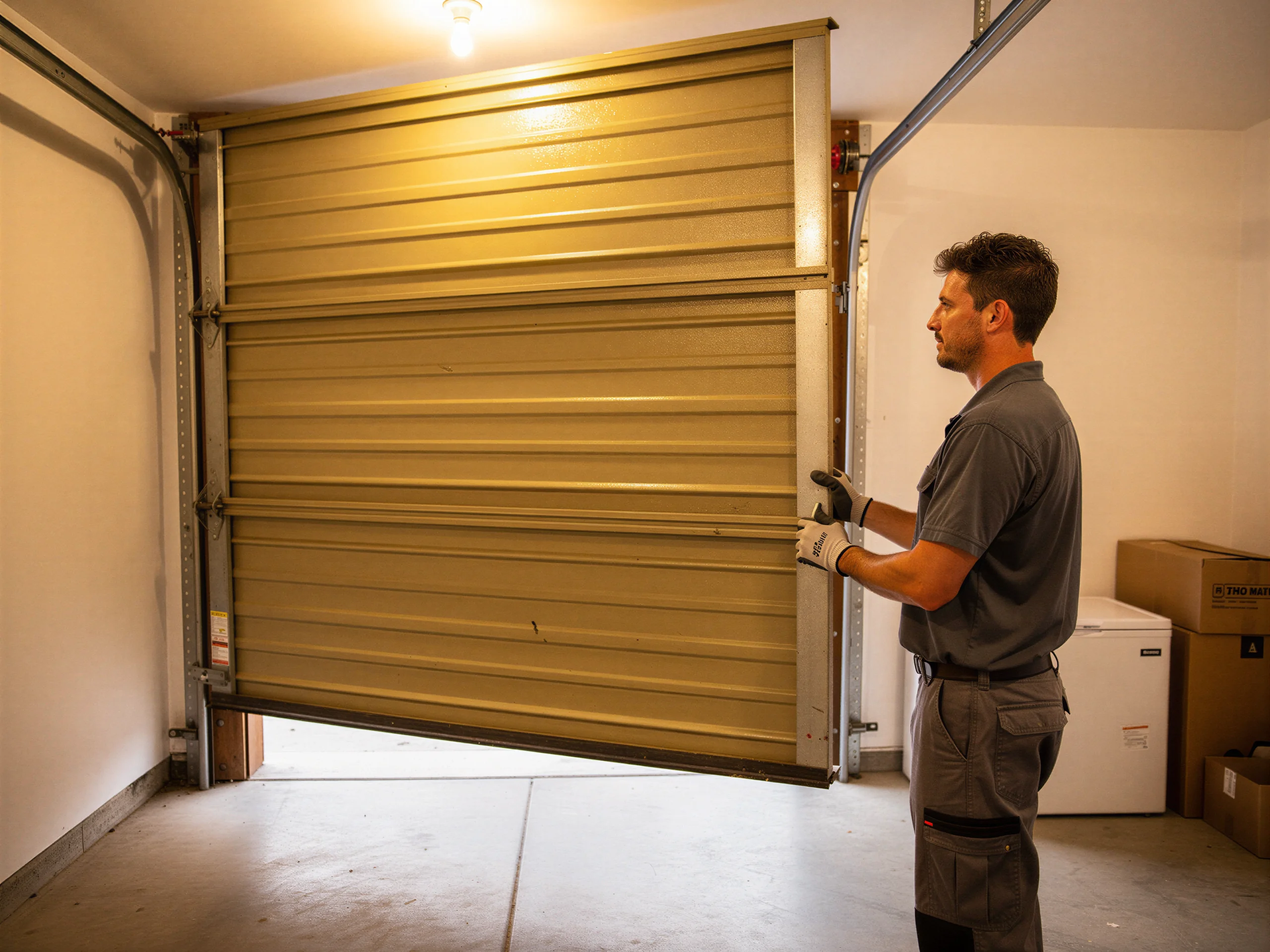
Farmington Garage Door Pros repairs and installs garage doors, springs and openers in Farmington, NM and the surrounding area.