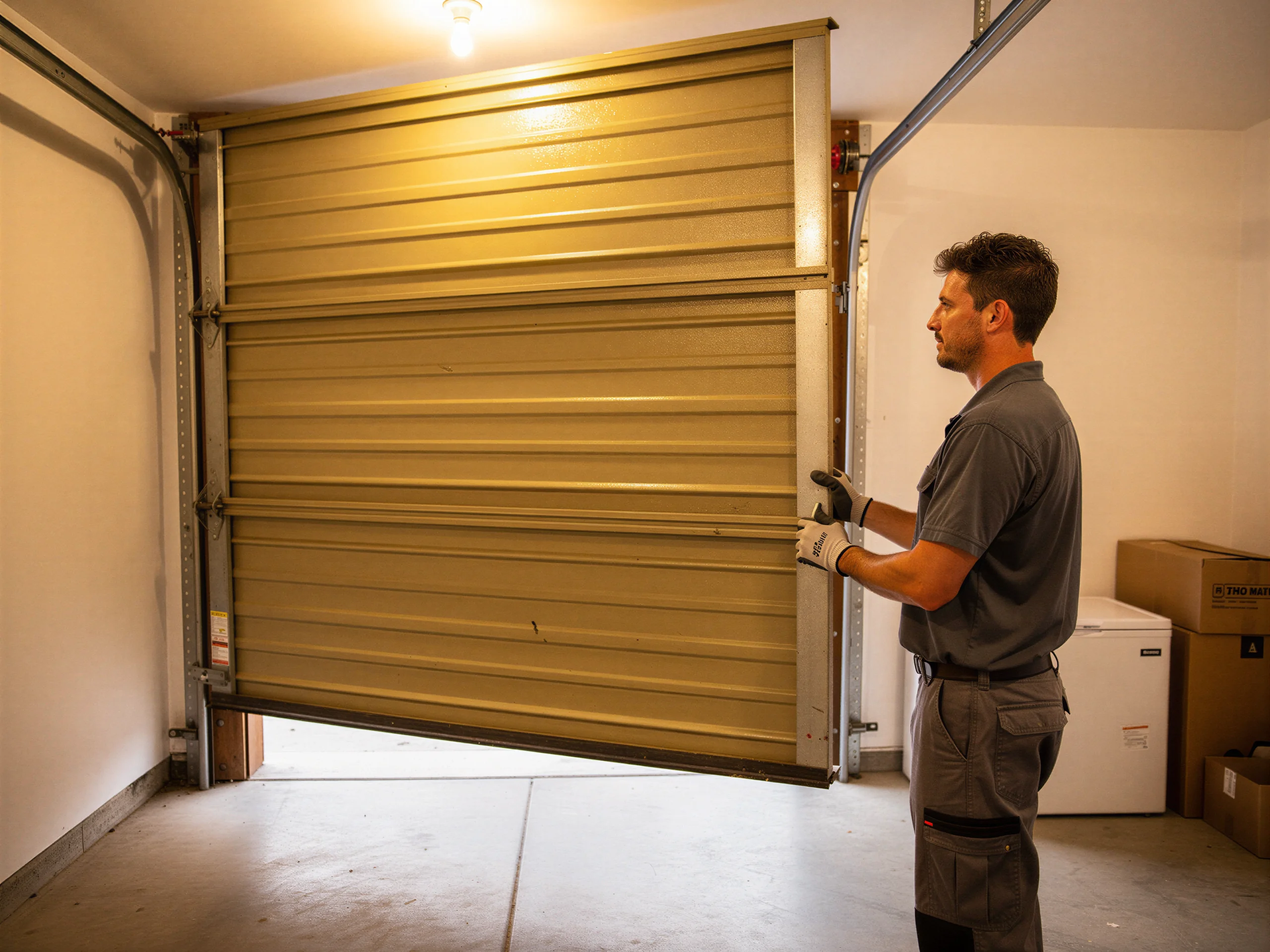
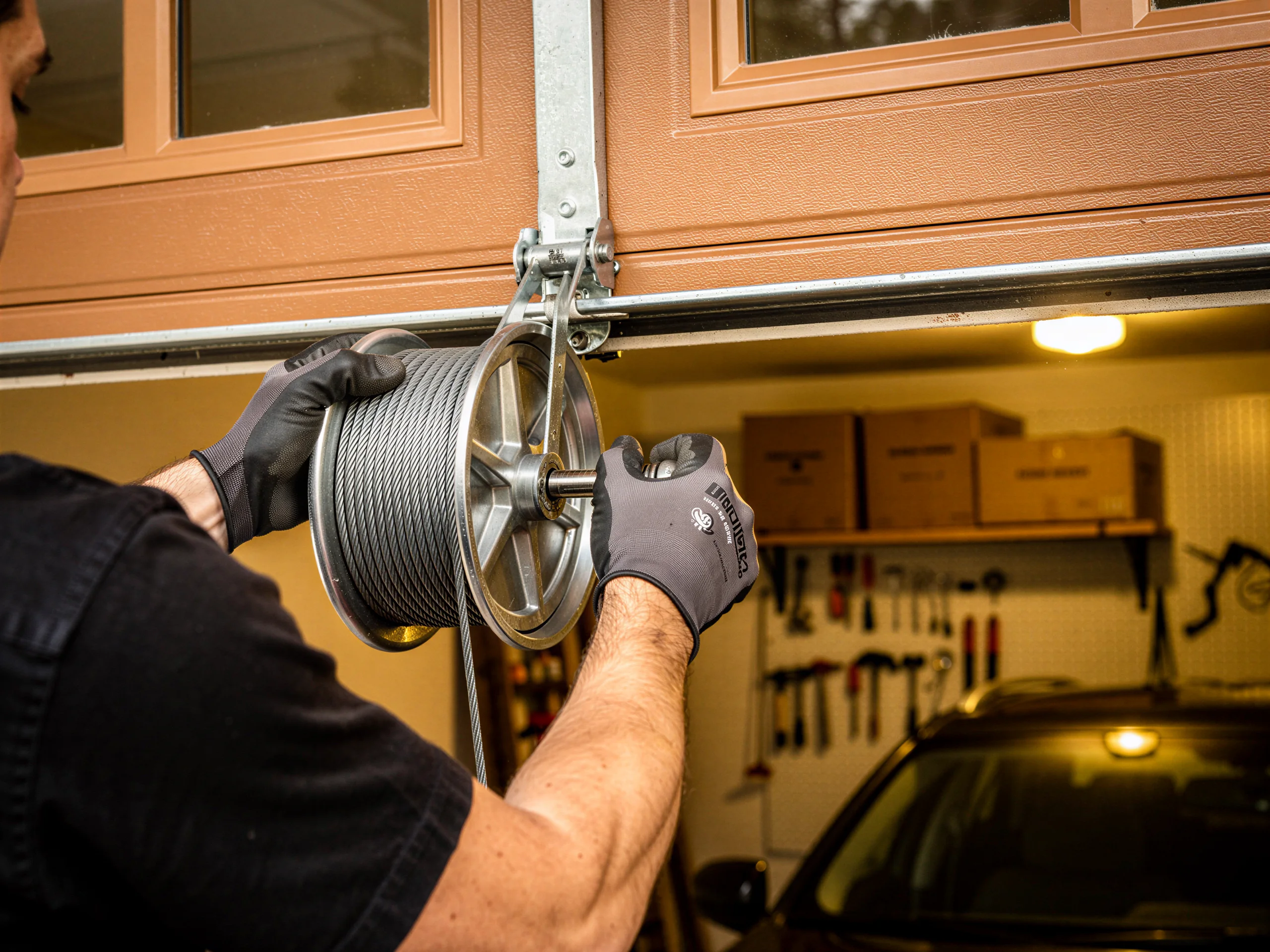
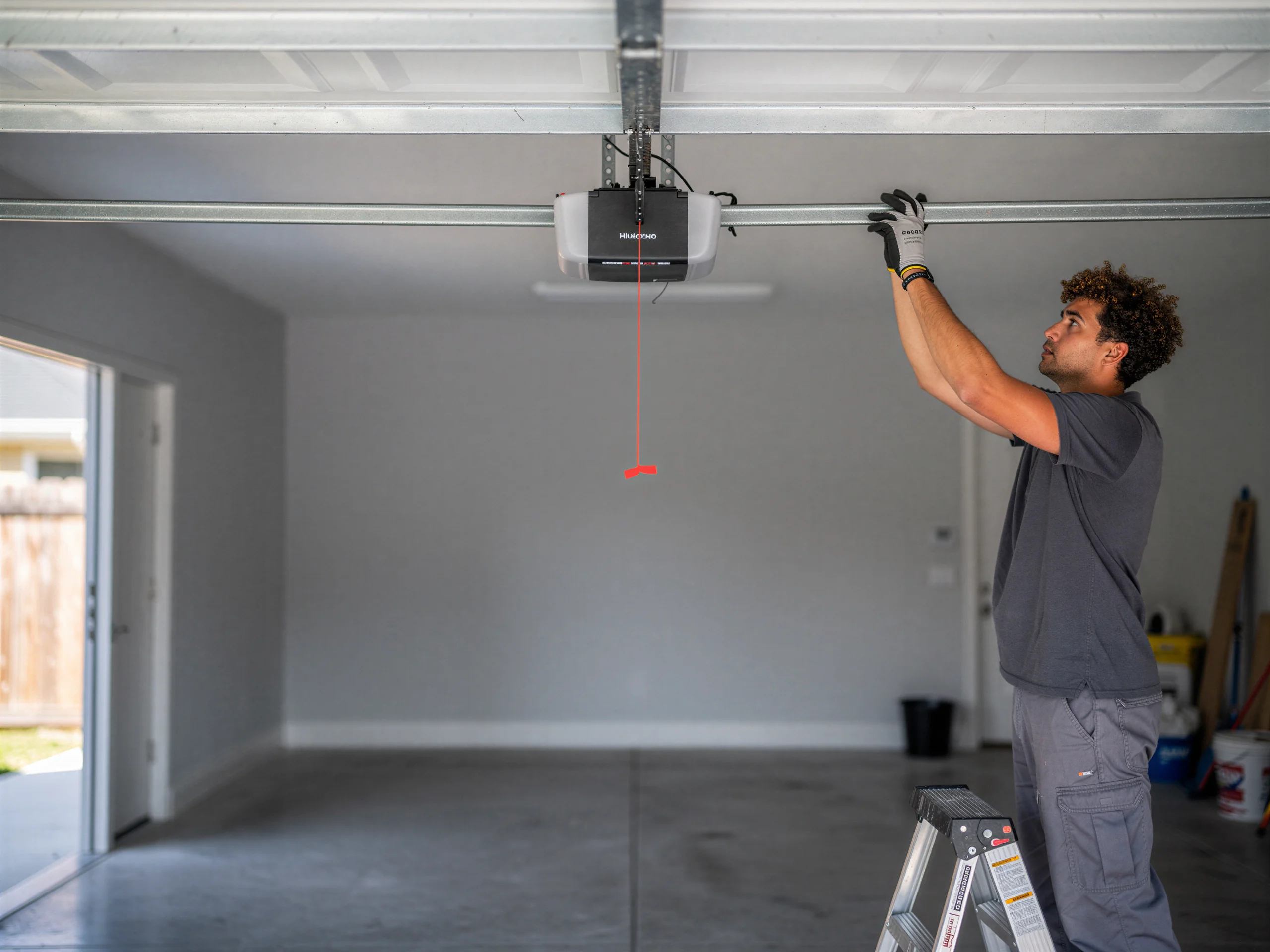
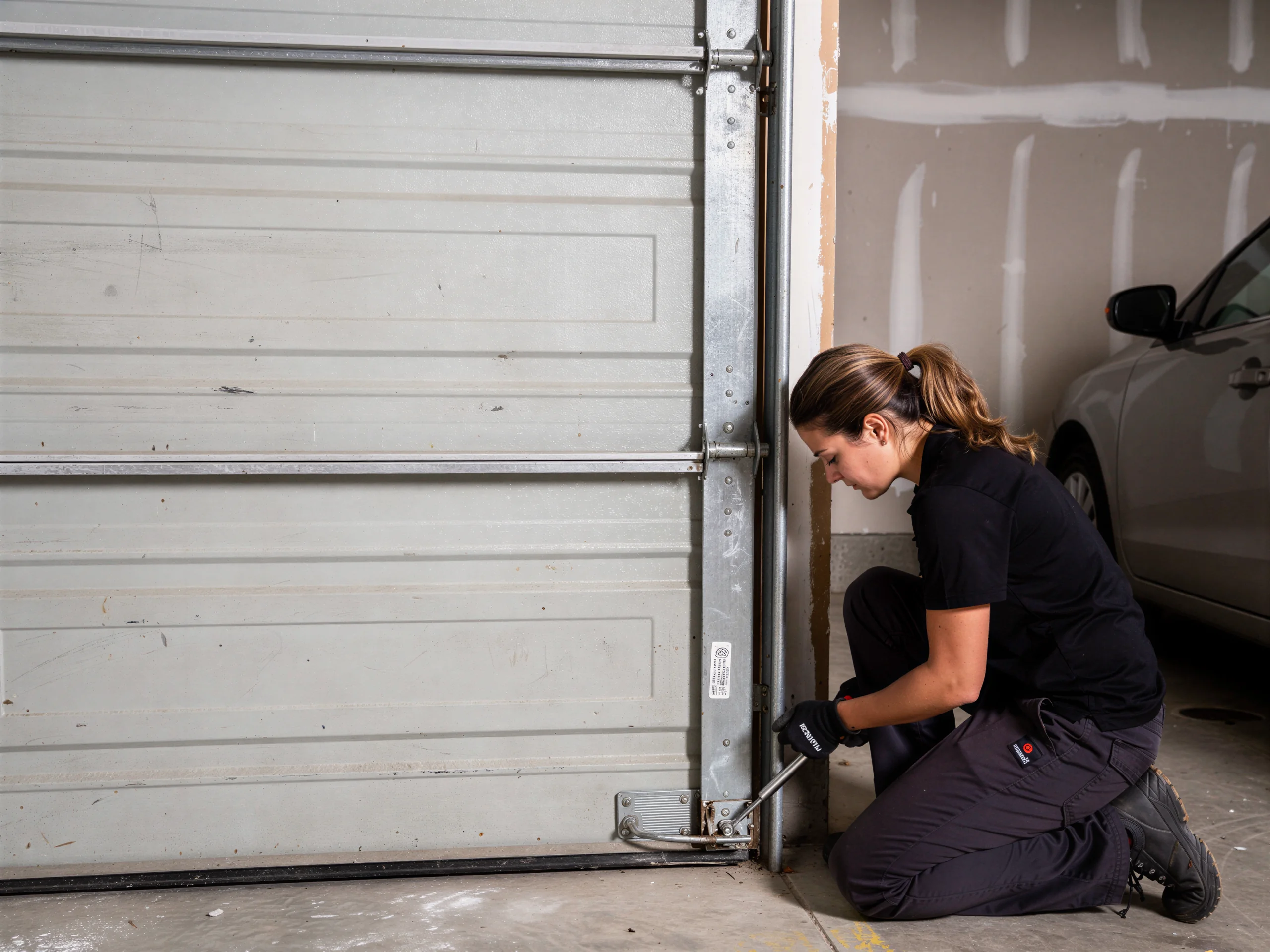
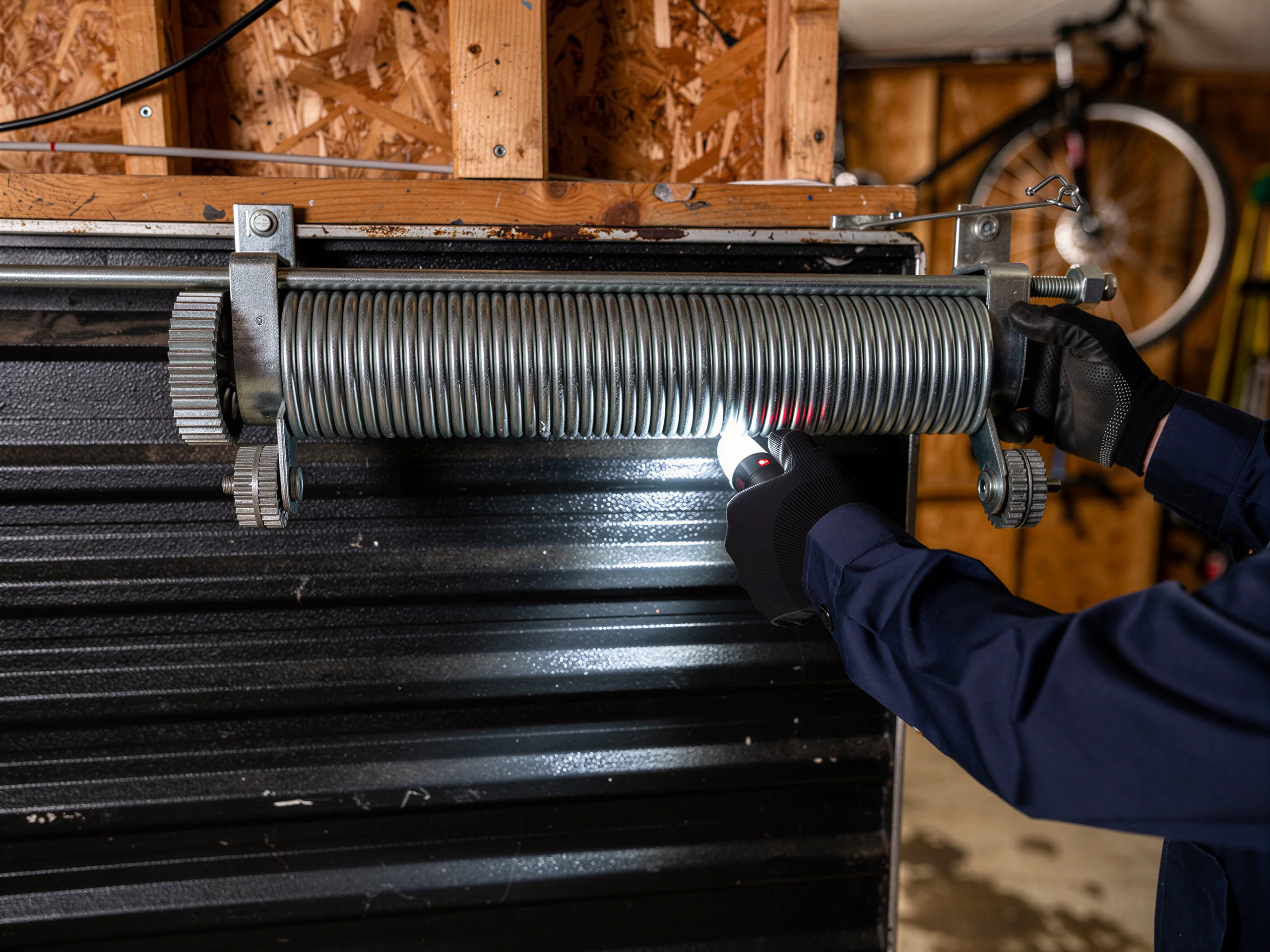
Two things do most of the damage here, and neither one is dramatic. The first is age of the housing stock itself - doors, springs, and track hardware installed when a house was built in the 1980s or early 1990s are still doing the job today because nobody's had a reason to touch them. Steel fatigues and hardware backs out slowly enough that you don't notice until the day you do.
The second is the cold. This is a severe cold climate, and that matters for a garage door in ways people don't expect. Steel springs lose tension and get brittle in sustained cold, lubricant inside rollers and hinges thickens or dries out, and the metal in tracks and panels contracts enough to throw bolted sections slightly out of alignment. None of that shows up in July. It shows up on the first hard cold snap of the season, when a spring that was marginal all year finally lets go, or a track that was a sixteenth of an inch off finally binds. Maintenance timed ahead of that cold is doing different work than maintenance done in warm weather - it's catching the parts that cold is about to expose.