Blog
Why Cold Mornings Break Springs on Farmington's Older Doors
Why torsion springs on Farmington's 1978-1993 housing stock fail more often in severe cold, what the warning signs look like, and when a repair call is worth it.
How Local Conditions Play In
Most of the houses we work on in this area went up between 1978 and 1993, with the median build year landing around 1985. That means a lot of the torsion springs still turning on these doors are original equipment, pushing toward forty years of wind-and-release cycles. Steel fatigues on its own schedule, but cold speeds it up. Farmington sits in a climate band the federal data marks as cold-severe, and a torsion spring that's been flexing for four decades loses some of its give right when the temperature drops hardest. The coil doesn't snap because it's cold out one morning - it snaps because years of cycling already thinned the metal, and the cold is just the final push. We see this pattern across the six areas we run trucks to: Flora Vista, Upper Fruitland, Kirtland, Bloomfield, Aztec, and Waterflow all carry that same 1980s-to-90s housing stock, so the same spring age shows up everywhere, not just in one neighborhood. If your door was built with the house, the spring under it has outlived most people's expectations already. It's not a defect. It's just time plus temperature doing what they do to galvanized steel wound tight under tension.
When to Call Someone
A spring that's about to go usually tells you first. Listen for a loud bang from the garage - that's often the spring letting go, not the door itself. Watch for a door that feels heavier than it used to when you lift it by hand with the opener disconnected; a healthy torsion spring should balance most of the door's weight on its own. Cable slack at the bottom corners, a door that opens a few inches and stalls, or visible gap in the coil are all signs the spring has already failed or is close to it. Don't keep running the opener against a broken spring - that's how you burn out the motor on top of the spring problem. If the door won't budge and you hear that bang, that's the call-now situation, especially once overnight temperatures start dropping hard. If it's just slow or noisy, you've got a little room, but not forever. A spring that's struggling in October is not going to get stronger by January.
The Situation
Across the area we serve, there are roughly 6,936 households, and about 2,935 of those are owner-occupied houses - a lot of garages, a lot of original hardware. With median household income here at $47,505, most of what we see is people trying to get real use out of a repair before they commit to a full opener or door replacement. That's a reasonable instinct. A spring swap on a double door is a fraction of the cost of replacing the whole system, and on a house built in that 1978-1993 window, the rest of the door is often still sound even when the spring isn't. Where it gets harder is sizing - springs are wound for a specific door weight and wind length, and a lot of the doors from that era used hardware that isn't a universal stock size anymore. We carry the common sizes. For anything unusual, we may need to order it, and I'm not going to pretend otherwise. That's the one honest limit on how fast we can turn around an oddball spring.
What Most People Get Wrong
The biggest mistake is trying to replace a torsion spring yourself. These are wound under enough tension to break a bone or worse if the winding bar slips, and that risk goes up, not down, in cold weather, because cold metal is more brittle and more likely to fracture under load rather than bend. The second mistake is replacing just one spring on a double door when both springs are the same age. If one went from four decades of cycling plus a cold morning, the other one is right behind it, and most of the labor cost is the same whether you do one side or two. The third mistake is waiting through a whole winter on a door that's clearly struggling, then being surprised when it fails on the coldest night of the year, which is exactly when a garage door tech has the most calls stacked up. If your spring is original to a house built in the 1978-1993 window, don't wait for the bang to decide it's time.
Questions
Common questions
Why do garage door springs break more in winter here?
Torsion springs are steel wound under constant tension, and steel gets more brittle as it cools. In this area's severe-cold winters, a spring that's already decades old from cycling finally reaches its breaking point on a cold morning. It's less about the cold causing damage and more about cold removing the last bit of give in metal that's already fatigued.
How old are most garage door springs in this area?
A lot of the housing here was built between 1978 and 1993, with a median build year around 1985. Unless a previous owner replaced it, the spring on a door that age is close to 40 years old, which is well past the point most springs are designed to last.
Should I replace one spring or both on a double door?
If both springs are the same age, which is usually the case on original hardware, replace both. One already failed from age and cold; the other is on the same clock and most of the job's labor cost doesn't change whether you do one side or two.
Can I replace a torsion spring myself?
I'd advise against it. These springs hold enough tension to cause serious injury if the winding bars slip, and cold weather makes the steel more likely to snap suddenly rather than bend. It's one of the few garage door jobs where the risk isn't worth the money saved.
Recommendation
You Might Also Like
More garage door guides for Farmington homeowners.
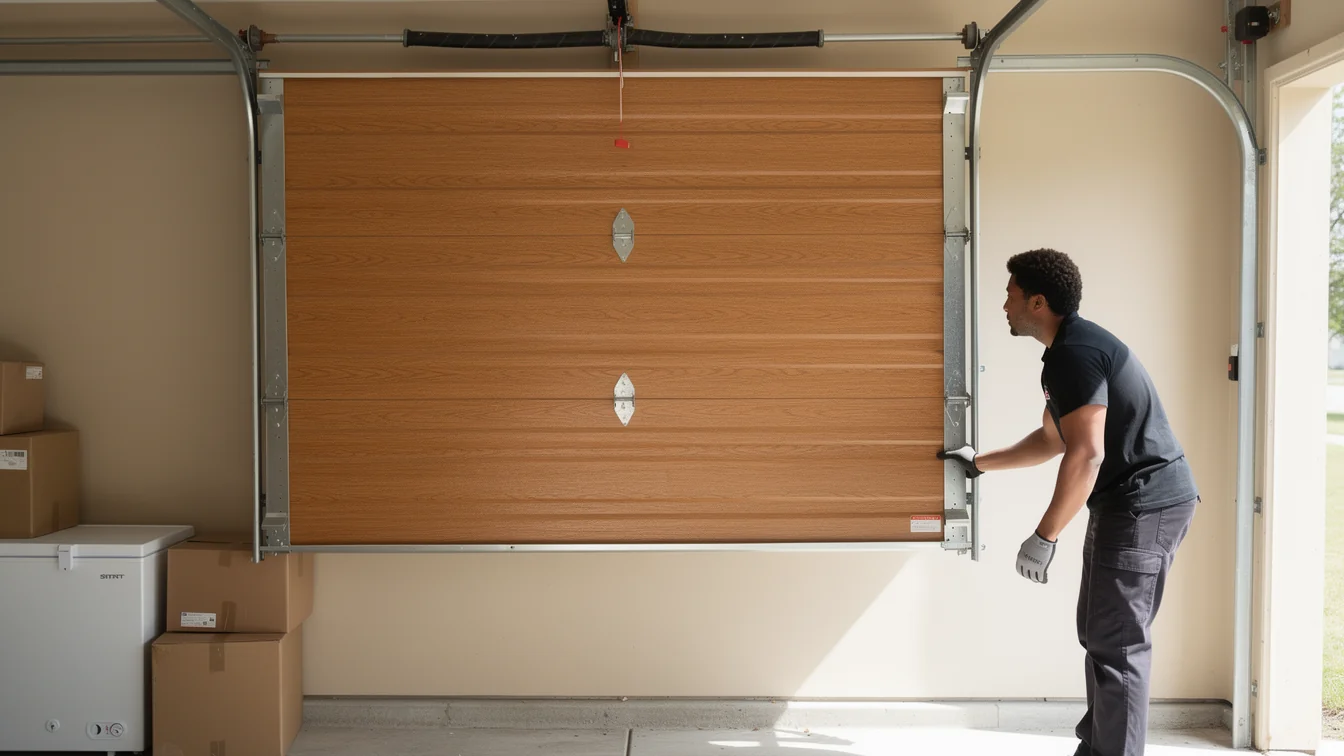
Why Farmington's 1980s Housing Stock Needs Different Garage Door Care
Farmington Garage Door Pros fixes torsion springs and openers on 1978-1993 built homes across Farmington, NM, where cold winters stress original hardware.
Read guide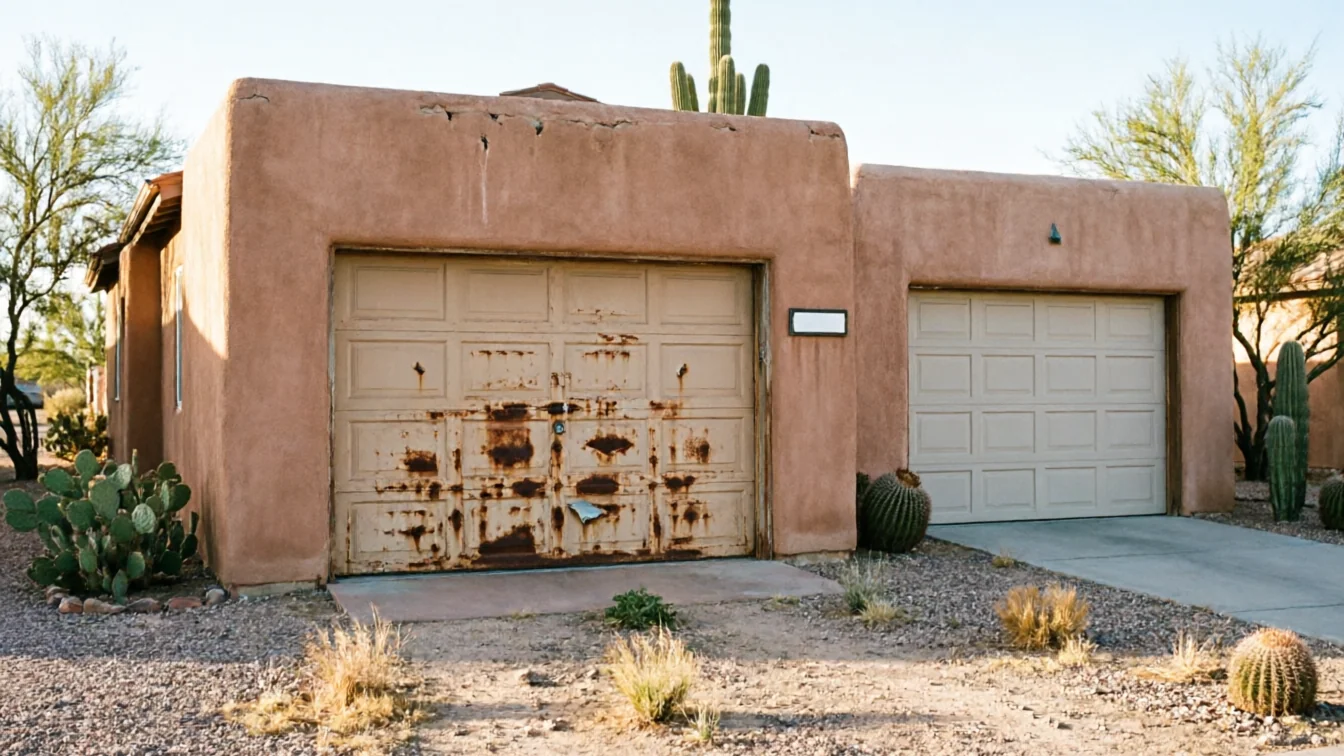
What We Actually Check When We Come to Your Door
A look at what a real service call covers for Farmington homes built 1978-1993, where cold winters and original hardware shape the job.
Read guide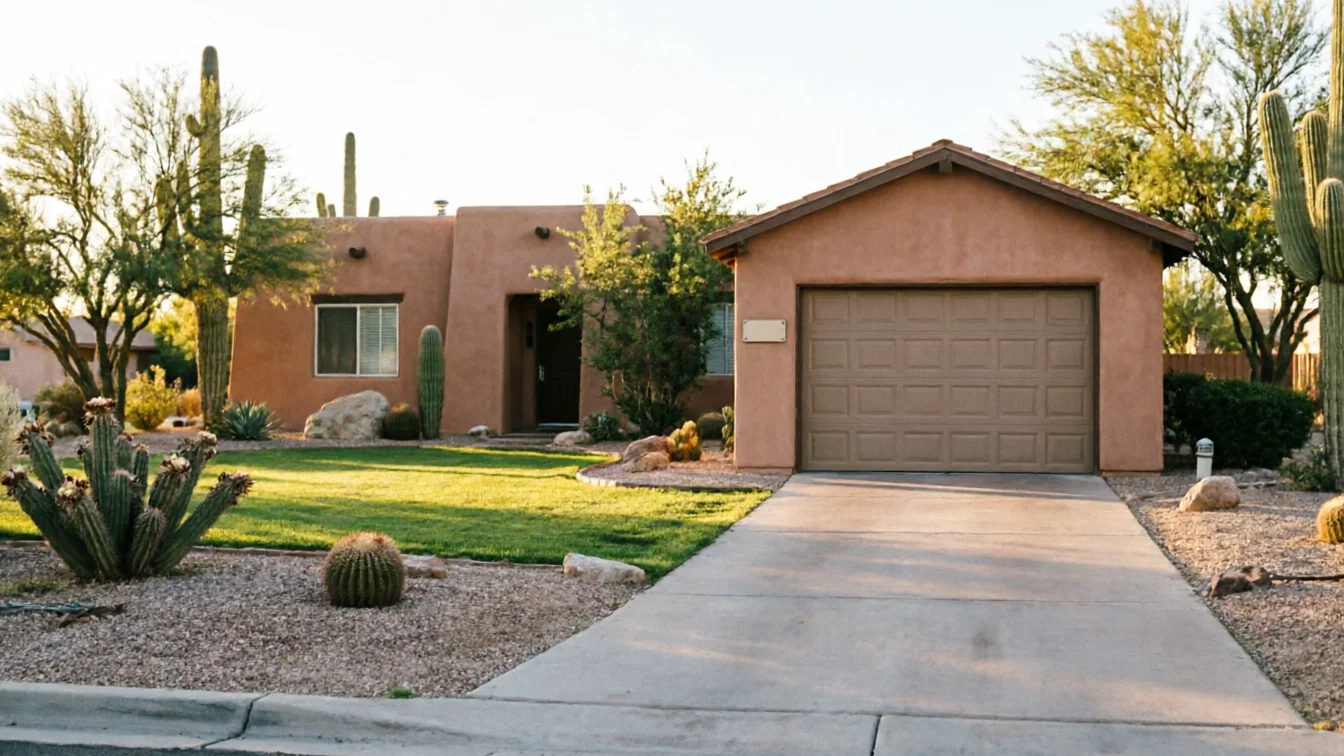
When the Power Goes Out: Openers in Farmington's 1980s Garages
How Farmington's 1980s-built houses and cold-severe winters affect garage door openers, and what actually fails when the power drops or the cold sets in.
Read guideReady when you are
Need a garage door sorted in Farmington?
Farmington Garage Door Pros repairs and installs garage doors, springs and openers in Farmington, NM and the surrounding area.